Circular No.: 254/11/2025-GST
Date of Circular: 27th October, 2025
Relevant Sections and Rules:
- CGST Act, 2017: Section 2(91), Section 5, Section 20 of IGST Act (read with CGST), Section 73, Section 74, Section 74A, Section 75(2), Section 122
- CGST Rules, 2017: Rule 142(1A)
- IGST Act, 2017: Section 20 (application of CGST provisions to IGST matters)
Summary of Circular (Advocate Perspective for Taxpayers)
- Assignment of Proper Officer for Section 74A, Section 122 and Rule 142(1A):
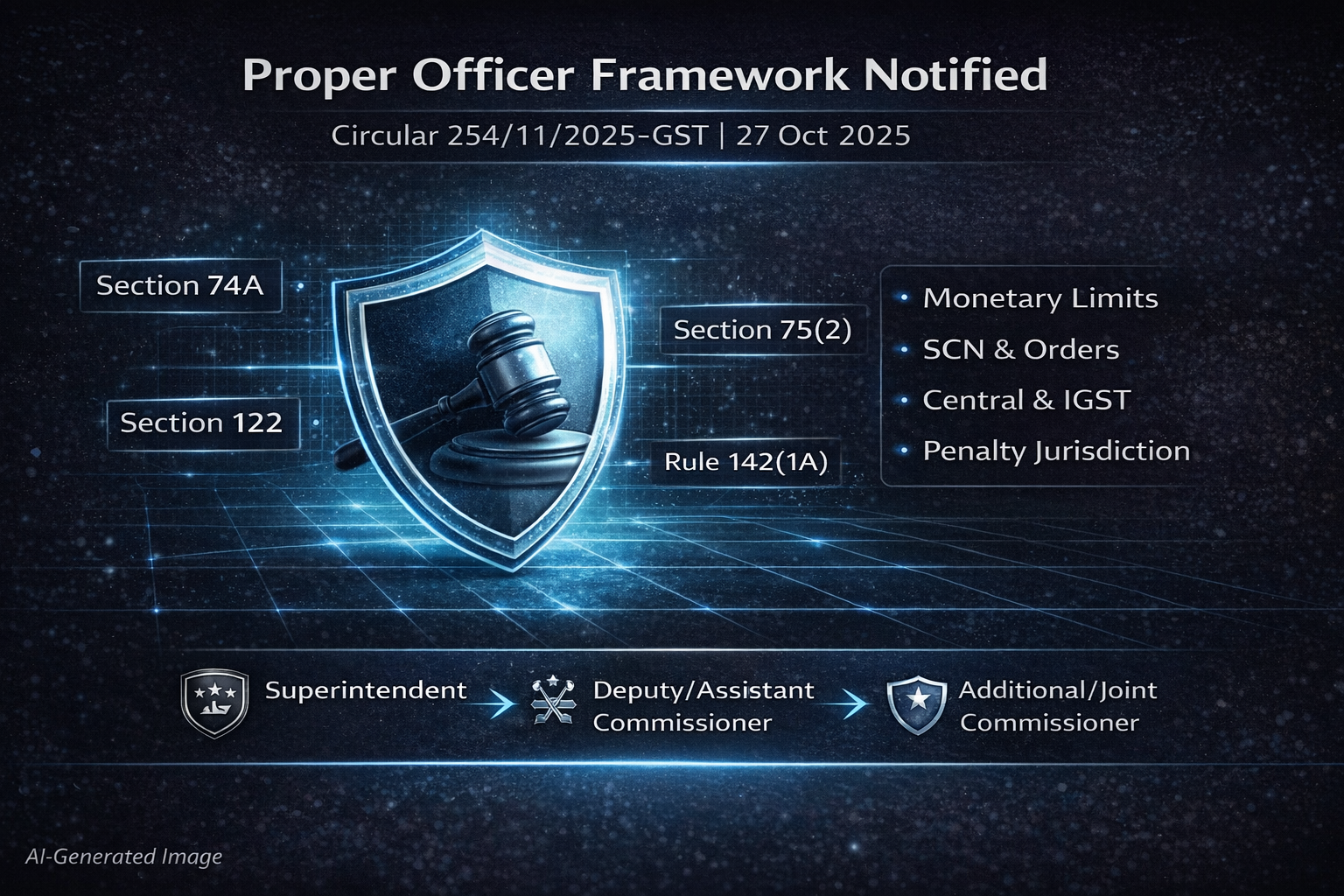
The Circular clarifies that since no proper officer had earlier been assigned for Section 74A (applicable from FY 2024-25 onwards for tax not paid/short paid/erroneously refunded/ITC wrongly availed), Section 122 (penalty provisions), and Rule 142(1A) (pre-SCN intimation in DRC-01A), the Board has now formally assigned Additional/Joint Commissioners, Deputy/Assistant Commissioners, and Superintendents as proper officers for these provisions. This removes ambiguity and ensures that any proceedings initiated under these provisions are jurisdictionally valid. - Monetary Limits for Issuance of SCN and Orders under Section 74A (Tax Demands):
To ensure structured adjudication, monetary limits have been prescribed for issuance of show cause notices and passing of orders under Section 74A. Superintendents can adjudicate smaller demands (up to ₹10 lakh Central Tax / ₹20 lakh IGST or combined), Deputy/Assistant Commissioners handle mid-range matters (up to ₹1 crore CT / ₹2 crore IGST or combined), and Additional/Joint Commissioners handle higher amounts without upper limit. Importantly, where both Central Tax and Integrated Tax are involved, the combined tax amount determines jurisdiction, preventing fragmented adjudication and protecting taxpayers from parallel proceedings. - Determination of Proper Officer for Subsequent Statements (Section 73/74/74A):
Where a statement for subsequent tax periods is issued after an SCN, the competent officer will be determined based on the highest tax amount across all periods. If the additional demand exceeds the original officer’s monetary limit, the matter must be transferred to the higher competent authority through corrigendum. This ensures adjudication by the legally competent authority and safeguards against jurisdictional challenges. - Exclusion of Penalty for Determining Monetary Limits (Section 74A):
For determining the proper officer under Section 74A, only the amount of tax demanded is considered; penalties are excluded from calculation. This clarification is beneficial for taxpayers as penalty amounts cannot artificially escalate jurisdiction to a higher authority. - Section 75(2) – Conversion from Fraud (Section 74) to Non-Fraud (Section 73):
Where an Appellate Authority/Tribunal/Court holds that fraud or suppression is not established under Section 74(1), the same adjudicating authority who originally handled the matter shall determine tax as if under Section 73(1). This ensures procedural continuity and avoids re-initiation by a different authority. - Monetary Limits for Penalty-Only Proceedings under Section 122:
Separate monetary limits have been prescribed for penalty-only proceedings under Section 122. Similar to tax demands, jurisdiction is based on the combined penalty amount of Central and Integrated Tax, ensuring clarity and preventing jurisdictional overlap. - Trade Facilitation and Implementation:
Field formations have been directed to issue trade notices to publicise the Circular, thereby promoting transparency and uniform implementation.
Source: Circular No.: 254/11/2025-GST