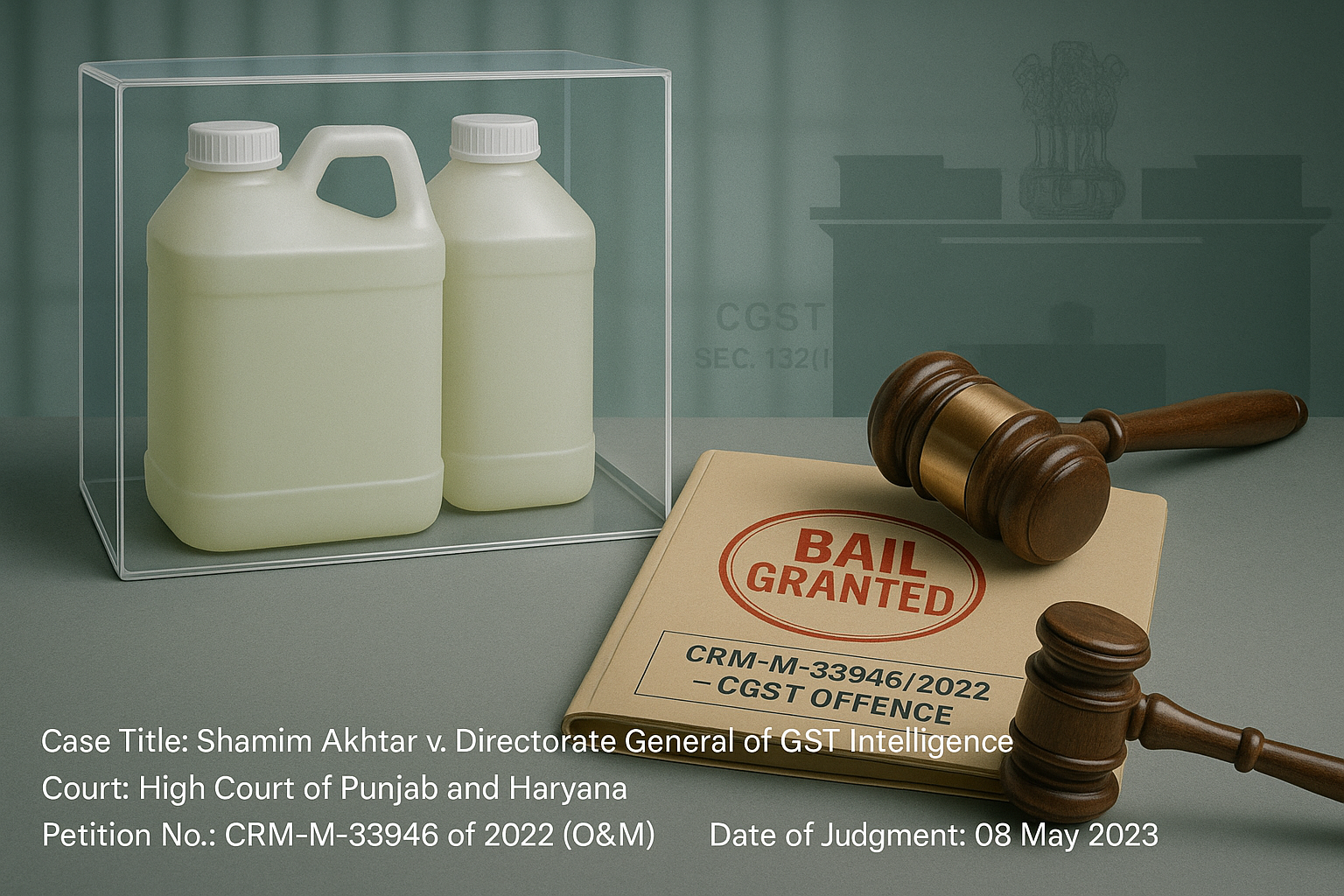
Shamim Akhtar v. Directorate General of GST Intelligence
High Court of Punjab and Haryana
CRM-M-33946 of 2022 (O&M)
Date of Judgement: 08 May 2023
Relevant Sections: Section 132(1)(A) & (I) of the CGST Act, 2017
Category: Bail in GST Offence involving Tax Evasion
Facts of the Case [Para 1–3]
- The petitioner, Shamim Akhtar, sought regular bail in Complaint No. 210 of 2021 dated 27.06.2022 under Section 132(1)(A) & (I) of the CGST Act, alleging GST evasion of ₹22.30 crores through illicit sale of resin made from urea.
- The arrest of the petitioner on 26.04.2022 was challenged as premature and in contravention of the CGST Act, since no assessment or adjudication of tax liability had taken place yet. [Para 2]
- The case was primarily built on the statement of Manoj Kumar, who claimed to have supplied agricultural urea to M/s Saba Chemicals. However, Manoj Kumar was neither made a witness nor was any direct recovery made from the petitioner. [Para 3]
Questions in Consideration [Para 1–5]
- Whether the petitioner is entitled to regular bail in light of:
- No direct recovery of goods or money,
- The evidentiary value of third-party statements,
- The quantum of punishment under the CGST Act, and
- The stage of trial being pre-charge evidence.
Observations of the Court [Para 4–5]
- The maximum punishment under the CGST Act is five years and the offences are triable by a Magistrate. The trial was still at the pre-charge evidence stage, indicating no immediate conclusion. [Para 5]
- Continued incarceration of the petitioner was held to serve no useful purpose. There was no denial from the department regarding the punishment or status of the trial. [Para 5]
Judgement of the Court [Para 5–6]
- The High Court granted regular bail to the petitioner. The bail was to be furnished to the satisfaction of the concerned trial Court/Duty Magistrate.
- It was clarified that no observations made in this order shall affect the merits of the case during the trial. [Para 6]
Between Fine Lines (Summary in Simple Terms)
- The High Court granted bail to the accused since there was no recovery from him, and the trial was far from conclusion.
- The main evidence was based on a third-party statement from someone not even cited as a witness.
- The case involved alleged tax evasion via unbilled sales of resin using agricultural urea.
- Maximum punishment under the CGST Act is five years, so prolonged detention was unjustified.
- This judgement doesn’t reflect on the merits of the case and is limited to bail considerations.
Summary of Referred Cases
| Name | Citation | Summary | Verdict |
| Manoj Kumar Bail Order | Order dated 22.06.2022 | Co-accused who allegedly supplied urea to the firm was granted bail. | Bail granted by the same High Court |