
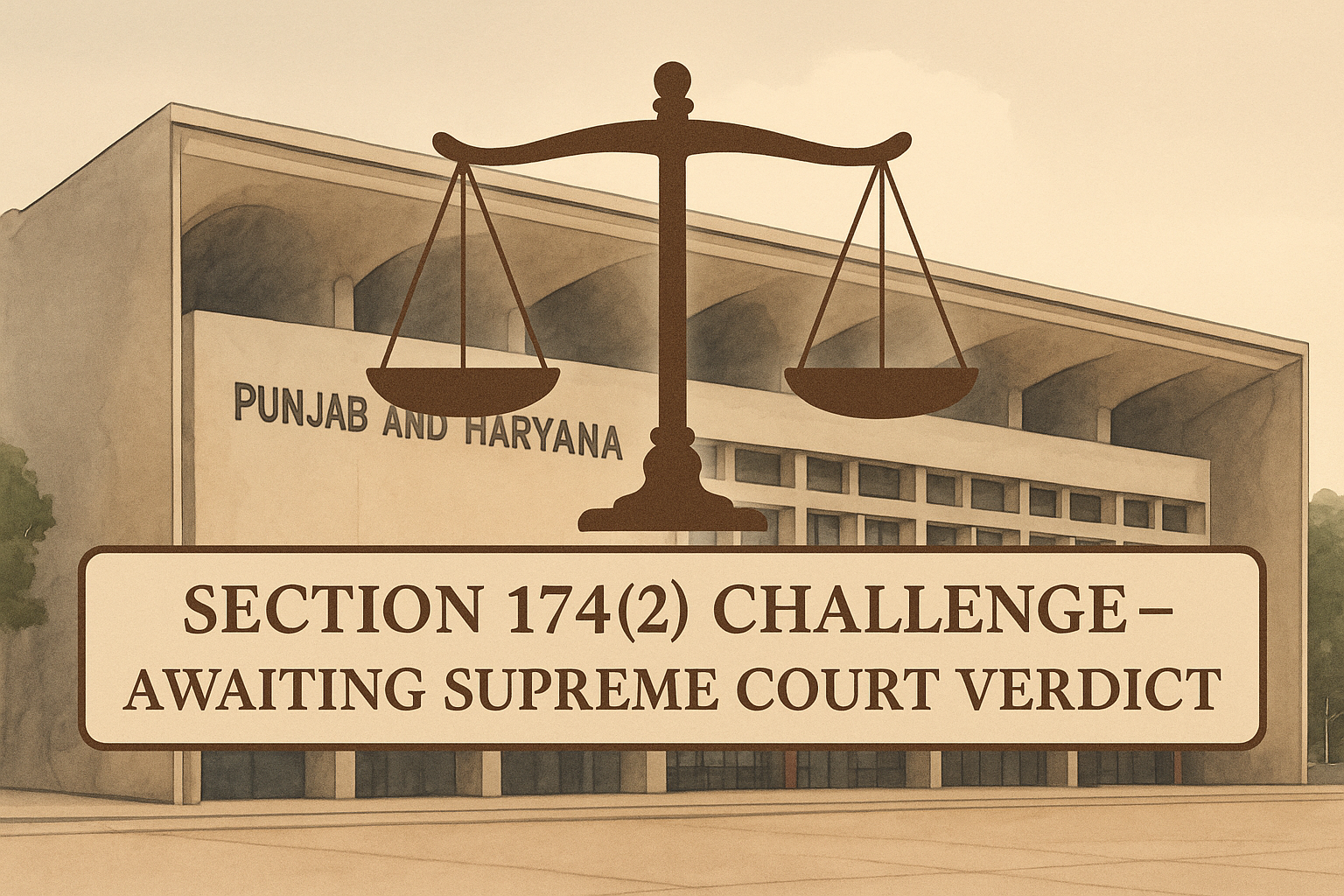
Case Title: M/s Good Morning Flour Mills v. State of Punjab and Others
Court: High Court of Punjab and Haryana at Chandigarh
Petition No.: CWP-34647-2024 (O&M)
Date of Judgment: 19.12.2024
Category: Constitutional validity – Transitional Provisions under GST
Relevant Section: Section 174(2) of the Punjab State GST Act, 2017 (pari materia with Section 174(2) of the CGST Act, 2017)
Facts
(Paras 1–3, 5–6)
M/s Good Morning Flour Mills filed a writ petition challenging the constitutional validity of Section 174(2) of the Punjab State GST Act, 2017, which deals with savings and repeal of provisions under the erstwhile VAT regime. The petitioner argued that the continuation of pre-GST proceedings under this section was unconstitutional and ultra vires the GST framework. The matter had been earlier adjudicated in Tecnimont Spa India Project Office v. State of Punjab and Another (CWP No. 18967 of 2020, decided on 10.12.2024), wherein the same issue was raised.
Questions Before the Court
(Para 2–4)
Whether Section 174(2) of the Punjab GST Act, 2017, which allows continuation of VAT-era proceedings after introduction of GST, violates the constitutional mandate and legislative competence of the State under the GST regime?
Observations
(Paras 3–6)
The Court noted that an identical challenge to Section 174(2) had been raised before the Kerala High Court, which upheld the validity of the provision, holding it to be within the legislative competence and constitutional framework. The Kerala High Court’s decision was subsequently challenged before the Hon’ble Supreme Court in T.S. Belaraman v. The Commercial Tax Officer and Others [SLP(C) No. 640/2023, now C.A. No. 006724/2024], where leave had been granted on 14.05.2024 and the Apex Court restrained Revenue authorities from taking coercive steps pending final adjudication.
Considering that the Punjab & Haryana High Court had already passed similar interim orders in related petitions, it held that final determination of the constitutional question must await the Supreme Court’s ruling in T.S. Belaraman.
Judgment
(Paras 5–7)
The Court disposed of the writ petition in line with its earlier judgment in Tecnimont Spa India Project Office and directed that the challenge to Section 174(2) shall remain subject to the final outcome of the Supreme Court’s decision in T.S. Belaraman. Until then, all interim orders protecting the petitioners from coercive action shall continue.
All pending applications were also disposed of accordingly.
Summary of Cases Referred
| Case Name | Court | Issue | Verdict |
|---|---|---|---|
| Tecnimont Spa India Project Office v. State of Punjab (CWP No. 18967/2020) | Punjab & Haryana HC | Challenge to Section 174(2) of State GST Act | Held issue pending; interim protection granted; to abide by Supreme Court’s ruling in T.S. Belaraman |
| T.S. Belaraman v. The Commercial Tax Officer & Ors. [SLP(C) No. 640/2023 / C.A. No. 6724/2024] | Supreme Court of India | Constitutional validity of Section 174(2) of Kerala GST Act | Leave granted on 14.05.2024; interim stay on coercive action; final judgment awaited |
| Kerala High Court batch cases on Section 174(2) | Kerala HC | Legislative competence to save VAT-era actions under GST | Upheld validity of Section 174(2); within constitutional framework |
Between Fine Lines (Practical Takeaway)
Businesses facing pending pre-GST assessments or VAT-era demands under Section 174(2) of the State GST Acts can continue to rely on interim reliefs until the Supreme Court delivers its final verdict in T.S. Belaraman. The High Courts are maintaining status quo and deferring adjudication, ensuring no coercive recovery is made in the interim.
Disclaimer – “The above summary is for academic purpose only; not formal legal opinion. Seek professional opinion before application. Author or publisher or website shall not be responsible for any usage in any form.”

 of the Punjab GST Act will abide by the Supreme Court’s decision in T.S. Belaraman, continuing interim protection to taxpayers.)