
Case Reference
Paritosh Kumar Singh alias Diwakar Choudhary & Ors. v. State of Chhattisgarh & Ors.
High Court of Chhattisgarh, Bilaspur
Writ Appeal No. 348 of 2021
Judgment reserved on: 21.03.2022 | Delivered on: 22.04.2022
Category: Bail under Section 167(2) CrPC in GST fraud case
Relevant Provisions: Section 132(1)(b) & (c), 134 of CGST Act, 2017; Section 167(2), 173, 190 CrPC
Facts (Paras 2–6)
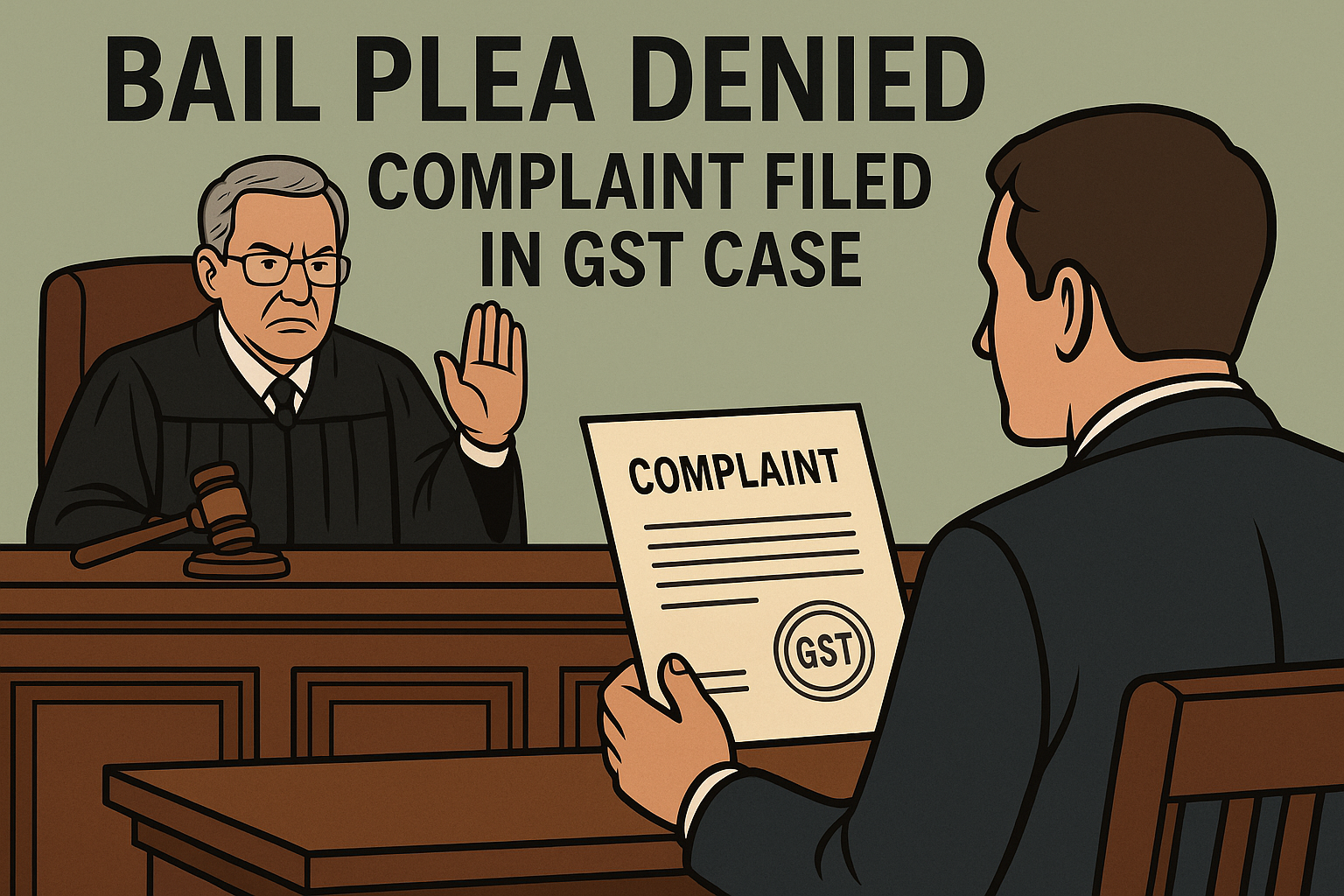
The appellants were accused of creating fictitious GST-registered firms across multiple states using forged PAN details and issuing fake invoices to pass on fraudulent Input Tax Credit (ITC) worth ₹44.72 crores. On 25.01.2021, the Directorate General of GST Intelligence (DGGI) arrested them under Section 132(1)(b) & (c) of the CGST Act. They were remanded to judicial custody. The appellants sought default bail under Section 167(2) CrPC on the ground that no charge sheet was filed within 60 days. Instead, the GST authority filed a complaint on 25.03.2021 before the Magistrate. The Chief Judicial Magistrate, revisional court, and Single Judge all rejected their plea, leading to the present writ appeal.
Questions before the Court (Paras 3–6)
-
Whether filing of a complaint (instead of a police charge sheet under Section 173 CrPC) by the GST authority amounts to completion of investigation for the purpose of Section 167(2) CrPC?
-
Whether the appellants acquired an indefeasible right to default bail since investigation was still continuing as per the complaint?
Observations (Paras 9–16)
-
Section 167(2) CrPC grants default bail if no final report is filed within 60 or 90 days, depending on offence gravity.
-
Section 134 of CGST Act requires prior sanction of Commissioner and prosecution before a Magistrate of First Class.
-
The Court drew analogy from Directorate of Enforcement v. Deepak Mahajan (AIR 1994 SC 1775), holding that “investigation” is not limited to police investigation, but also includes proceedings by statutory officers empowered under special laws.
-
Filing of a complaint with supporting documents and witness list by DGGI amounted to sufficient compliance with Section 167(2) CrPC. Supplementary material could be filed later without invalidating the complaint.
-
Since cognizance was already taken by the Magistrate, appellants were not entitled to default bail.
Judgment (Paras 16–17)
The Division Bench upheld the orders of the lower courts, ruling that:
-
The complaint filed within 60 days satisfied the statutory requirement.
-
No indefeasible right to default bail accrued.
-
The writ appeal was dismissed at the admission stage.
Table of Cases Referred
| Case | Court | Citation | Ratio |
|---|---|---|---|
| Directorate of Enforcement v. Deepak Mahajan | Supreme Court | AIR 1994 SC 1775 | Investigation under special Acts is not confined to police; complaint by empowered officer is valid for CrPC compliance. |
Between Fine Lines
This ruling clarifies that in GST fraud cases, the filing of a complaint by DGGI or similar statutory authority within 60 days is enough to block default bail, even if investigation is still continuing. For the trade, it signals that authorities need not file a charge sheet like the police; a complaint suffices. Businesses facing GST fraud allegations cannot rely on technical delay in “charge sheet” filing for default bail if a complaint is already before the court.
Disclaimer – “The above summary is for academic purpose only; not formal legal opinion. Seek professional opinion before application. Author or publisher or website shall not be responsible for any usage in any form.”

 CrPC, denying default bail in fake ITC fraud case.)