
Case Title: Tvl. Hi Version v. Commissioner of Commercial Taxes & Anr.
Court: Madurai Bench of Madras High Court
Petition No.: W.P.(MD) Nos. 4026 & 4027 of 2025
Date of Judgment: 17.02.2025
Category: Delay in filing GSTR-3B returns / Assessment under Section 62 – Condonation of Delay
Relevant Sections: Section 62(1) & (2), Section 46, Section 50(1), Section 47 of the CGST/TNGST Act, 2017
Facts (Para 3–5):
The petitioner, Tvl. Hi Version, failed to file GSTR-3B returns for February and April 2023 within the due date. The Deputy State Tax Officer issued notices under Section 46 directing filing within 15 days but, upon non-compliance, passed best judgment assessments under Section 62(1) on 19.04.2023 and 28.06.2023 demanding ₹2,87,884 each. Due to ill health, the petitioner filed returns belatedly on 04.01.2024 and 09.01.2024, along with interest and late fee. Authorities insisted on payment of demand, leading to the writ petitions seeking quashing of assessment orders and condonation of delay.
Questions of Law (Para 6–7):
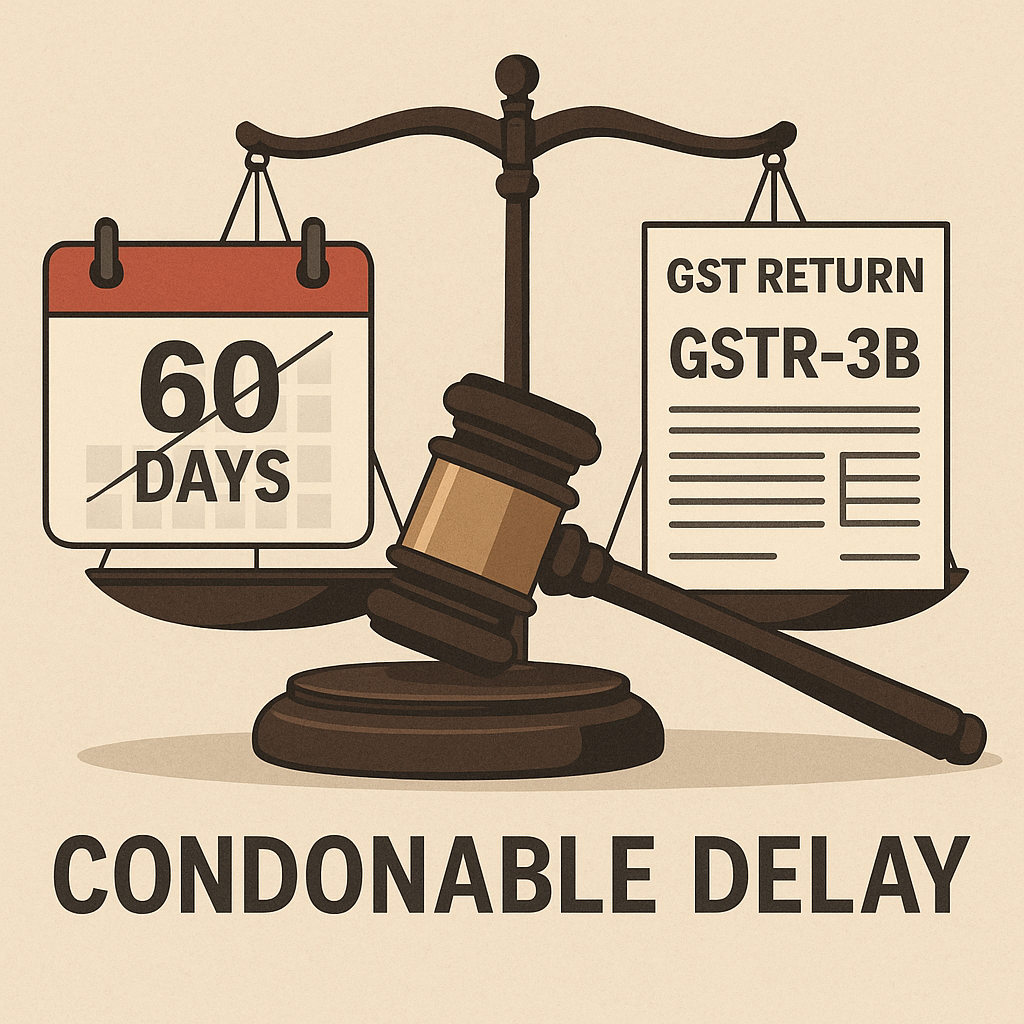
Whether the petitioner who filed returns beyond 60 days of best judgment assessment under Section 62(2) could seek condonation of delay and have the assessment orders treated as withdrawn.
Court’s Observations (Para 8–16):
The Court analyzed Section 62 of the GST Act, emphasizing that:
-
Section 62(2) provides a 60-day period for the assessee to file returns post-best judgment assessment for automatic withdrawal of such orders.
-
The purpose of this provision is remedial—to give an opportunity to rectify non-filing.
-
However, if the delay in filing is due to reasons beyond control (like illness), it should not extinguish the right to file returns.
-
The Court clarified that the five-year limitation for completing assessments allows flexibility and that the 60-day period under Section 62(2) is directory, not mandatory.
-
Thus, delay beyond 60 days can be condoned by the proper officer if sufficient cause is shown, ensuring the assessee’s substantive right to compliance is preserved.
Judgment (Para 16–17):
The Court held that:
-
The 60-day period under Section 62(2) is directory in nature.
-
The petitioner is permitted to file an application within 15 days seeking condonation of delay.
-
The assessing authority must consider the reasons and, if satisfied, condone the delay and permit filing of revised returns.
-
The writ petitions were disposed of with these directions, and no costs were awarded.
Summary of Cases Referred:
| Case Name | Citation | Principle / Verdict |
|---|---|---|
| N/A (Pure interpretation case) | — | The judgment relied primarily on statutory interpretation of Section 62 without external citations. |
Between Fine Lines:
This ruling provides substantial relief to taxpayers who miss the 60-day window to file returns after best judgment assessments. The Madras High Court clarified that Section 62(2) is directory—not a rigid cut-off—allowing authorities to condone delay upon reasonable justification. It prevents undue hardship to small taxpayers facing genuine difficulties, aligning with the GST’s intention of voluntary compliance over penalization.
Disclaimer – “The above summary is for academic purpose only; not formal legal opinion. Seek professional opinion before application. Author or publisher or website shall not be responsible for any usage in any form.”


 is directory, not mandatory.)