(b) of the CGST/KGST Act.)
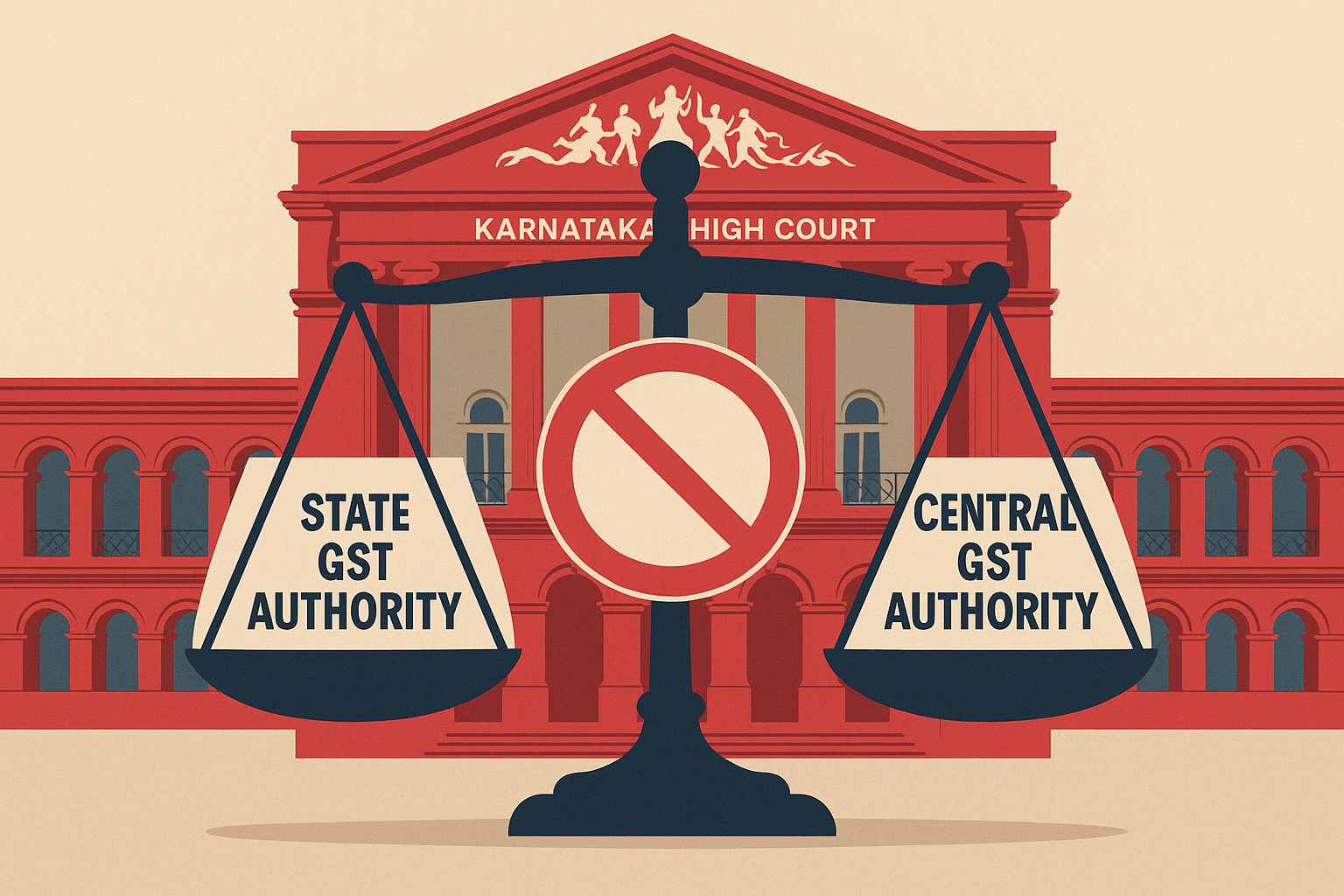
Case Title: M/s Al-Tech Engineering and Construction Pvt. Ltd. v. Union of India & Ors.
Court: High Court of Karnataka, Bengaluru
Petition Number: W.P. No. 27664 of 2024 (T-RES)
Date of Judgment: 20 March 2025
Category: Dual proceedings under GST – Assessment under Section 73
Relevant Sections: Sections 6(2)(b), 73(1), 73(9), and 128A of the CGST/KGST Acts, 2017
Facts (Paras 1–3)
M/s Al-Tech Engineering and Construction Pvt. Ltd., engaged in engineering services, challenged multiple show-cause notices and adjudication orders for FY 2019–20 issued both by the Deputy Commissioner (Audit) – Respondent No. 5 and the Assistant Commissioner – Respondent No. 6 under Section 73(1) of the CGST/KGST Act.
The petitioner contended that such simultaneous and parallel proceedings by both officers for the same period violated the statutory prohibition under Section 6(2)(b), which restricts dual proceedings between State and Central authorities.
Questions Before the Court (Para 3)
Whether initiation of dual/simultaneous proceedings under Section 73 by both Central and State authorities for the same tax period is legally permissible, and whether such actions vitiate the resultant adjudication orders.
Court’s Observations (Paras 3–6)
The Court observed that both Respondent No. 5 and Respondent No. 6 issued separate show-cause notices and orders, each alleging the same set of contraventions for FY 2019–20. This amounted to parallel adjudication, clearly barred under Section 6(2)(b) of the GST Act, which mandates that once proceedings are initiated by one authority (Central or State), the other cannot institute similar proceedings for the same cause of action.
The Court emphasized the principle of jurisdictional discipline, observing that duplication of proceedings causes undue hardship to taxpayers and undermines the “one-tax, one-assessment” scheme under GST.
Judgment (Paras 6–8)
-
The writ petition was allowed.
-
The show-cause notice and order dated 16.08.2024 issued by the Assistant Commissioner (Respondent 6) and the adjudication orders dated 17.08.2024 by the Deputy Commissioner (Respondent 5) were quashed.
-
The matter was remitted to Respondent 5 for fresh adjudication from the stage of reply to the show-cause notice dated 30.05.2024.
-
The petitioner was directed to appear on 24.03.2025, and the Deputy Commissioner was instructed to pass orders by 26.03.2025 under Section 73(9).
-
The Court further held that after adjudication, the petitioner may seek benefit under the GST Amnesty Scheme (Section 128A).
-
The judgment was expressly limited to the peculiar facts of this case and not to be treated as precedent.
Summary of Cases Referred
| Case Name | Issue | Verdict / Ratio |
|---|---|---|
| No external citations were specifically mentioned in the judgment. | – | The Court relied solely on statutory interpretation of Section 6(2)(b) of the GST Act prohibiting dual proceedings. |
Between Fine Lines (Practical Takeaway)
This ruling reinforces that taxpayers cannot be subjected to parallel proceedings under GST by both Central and State authorities for the same period and cause. Any such duplicated assessments are void ab initio. The decision emphasizes administrative coordination between GST authorities and safeguards the taxpayer from repetitive litigation.
Disclaimer – “The above summary is for academic purpose only; not formal legal opinion. Seek professional opinion before application. Author or publisher or website shall not be responsible for any usage in any form.”