

Case Title: Falcon Synergy Engineering Pvt. Ltd. v. Assistant State Tax Officer & Ors.
Court: High Court of Kerala at Ernakulam
Petition No.: WP(C) No. 8377 of 2025
Date of Judgment: 04 March 2025
Category: Input Tax Credit (ITC) – Excess Availment
Relevant Section: Section 73(9) of the CGST/ KGST Act, 2017
Rules Referred: Rule 142 (SCN & summary in DRC-01/07)
Facts of the Case
-
The petitioner, Falcon Synergy Engineering Pvt. Ltd., challenged an assessment order dated 08.08.2024 passed under Section 73(9) of the CGST/ KGST Act alleging excess ITC availment for FY 2019-20 (¶2).
-
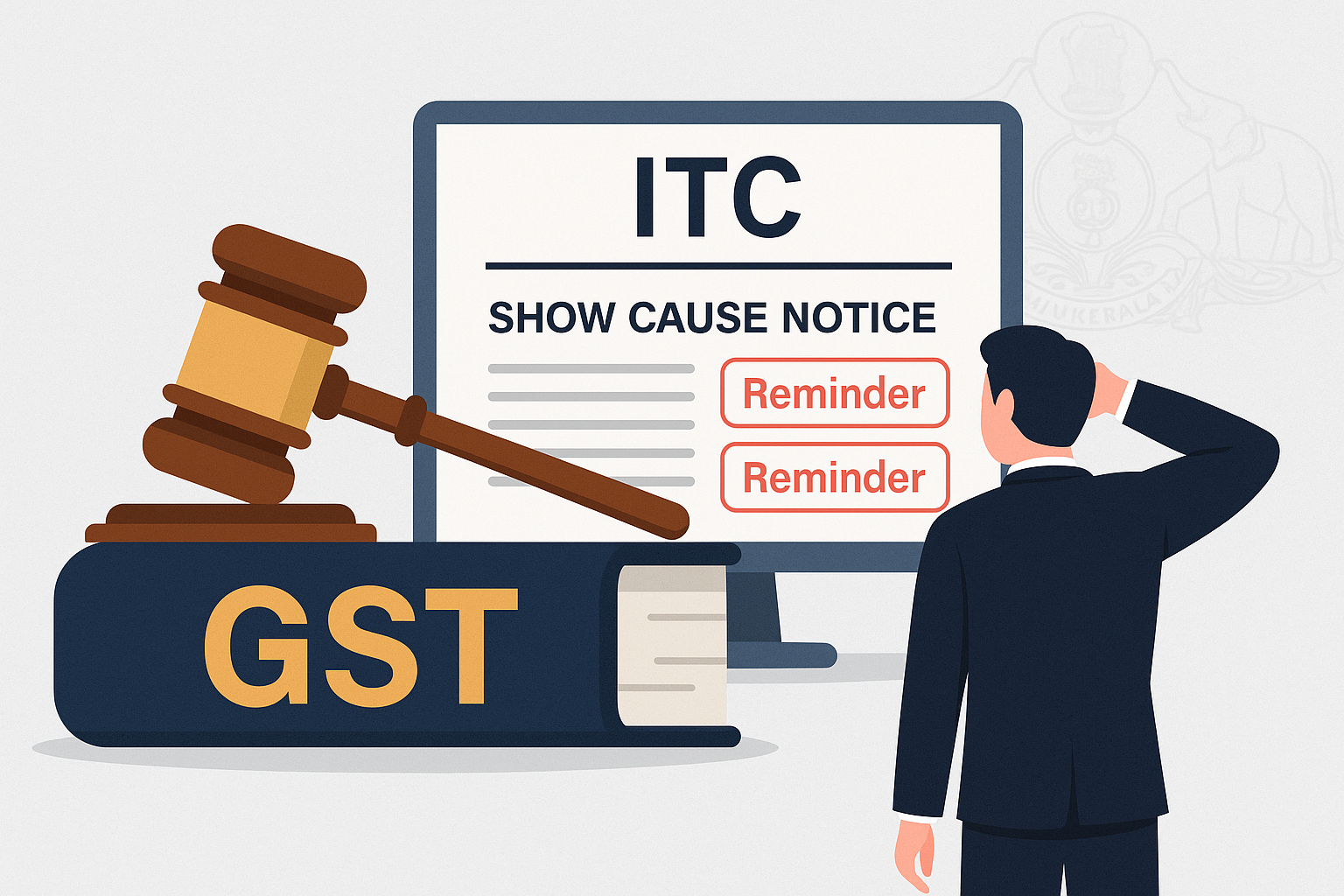
A show cause notice in Form DRC-01 was issued on 16.05.2024, followed by three reminder notices on 24.06.2024, 04.07.2024, and 22.07.2024. The petitioner failed to reply or attend the hearing (¶2).
-
An assessment order (Exh. P7) was passed, creating tax liability. Later, the petitioner filed a rectification petition on 29.01.2025 contending that the excess ITC arose from a clerical mistake by staff (¶3).
-
The petitioner argued that no real opportunity of hearing was granted, and the error was purely clerical (¶3).
Question(s) in Consideration
-
Whether the petitioner was denied an opportunity of hearing under Section 73 before passing the assessment order? (¶5).
-
Whether clerical mistakes in ITC reporting can be rectified after passing of order under Section 73(9)? (¶3).
Observations of the Court
-
The Court noted that opportunity was provided through SCN and three reminders across three months. A private company cannot plead ignorance of statutory electronic notices (¶5).
-
Failure to avail an opportunity is distinct from failure to provide one. Here, notices were duly served, but the petitioner defaulted in response (¶6).
-
The Court clarified that the blame lies on the petitioner, not the tax authorities, for not responding to statutory communications (¶6).
-
Since the petitioner ignored the statutory process, writ jurisdiction under Article 226 cannot be invoked (¶6).
Judgment of the Court
-
The writ petition was dismissed.
-
Liberty was reserved for the petitioner to pursue available statutory appellate remedies under GST law (¶5–6).
Between Fine Lines (Simplified Summary in 5 lines)
The Kerala High Court held that notices served through the GST portal and reminders constitute valid opportunities of hearing. A company cannot later claim denial of natural justice if it ignored them. Clerical errors in ITC reporting cannot be rectified belatedly through writ jurisdiction. Since the petitioner defaulted, the assessment order under Section 73(9) stands valid. Remedy lies only in statutory appeal, not writ.
Summary of Referred Cases
| Case Name | Citation | Summary | Verdict |
|---|---|---|---|
| Lalith Electricals v. Assistant Commissioner | (2024) Supreme Online (Mad) 17070 | Concerned with the requirement of opportunity of hearing before passing GST orders. | Relied upon by petitioner, but distinguished as in present case multiple notices were issued. |
Disclaimer – “The above summary is for academic purpose only; not formal legal opinion. Seek professional opinion before application. Author or publisher or website shall not be responsible for any usage in any form.”

