


Case Details
-
Case Title: Tvl. Evershine Industries v. Assistant Commissioner, Harbour Assessment Circle
-
Court: High Court of Judicature at Madras
-
Petition No.: W.P. No. 15781 of 2025 with W.M.P. Nos. 17837 & 17838 of 2025
-
Date of Judgment: 02.06.2025
-
Hon’ble Judge: Justice Krishnan Ramasamy
-
Category of Dispute: Assessment order – Natural Justice – Validity of notice service
-
Relevant Sections: Section 73 & Section 169 of the CGST Act, 2017; Rule 142; Form DRC-07
Facts (Para 3–5)
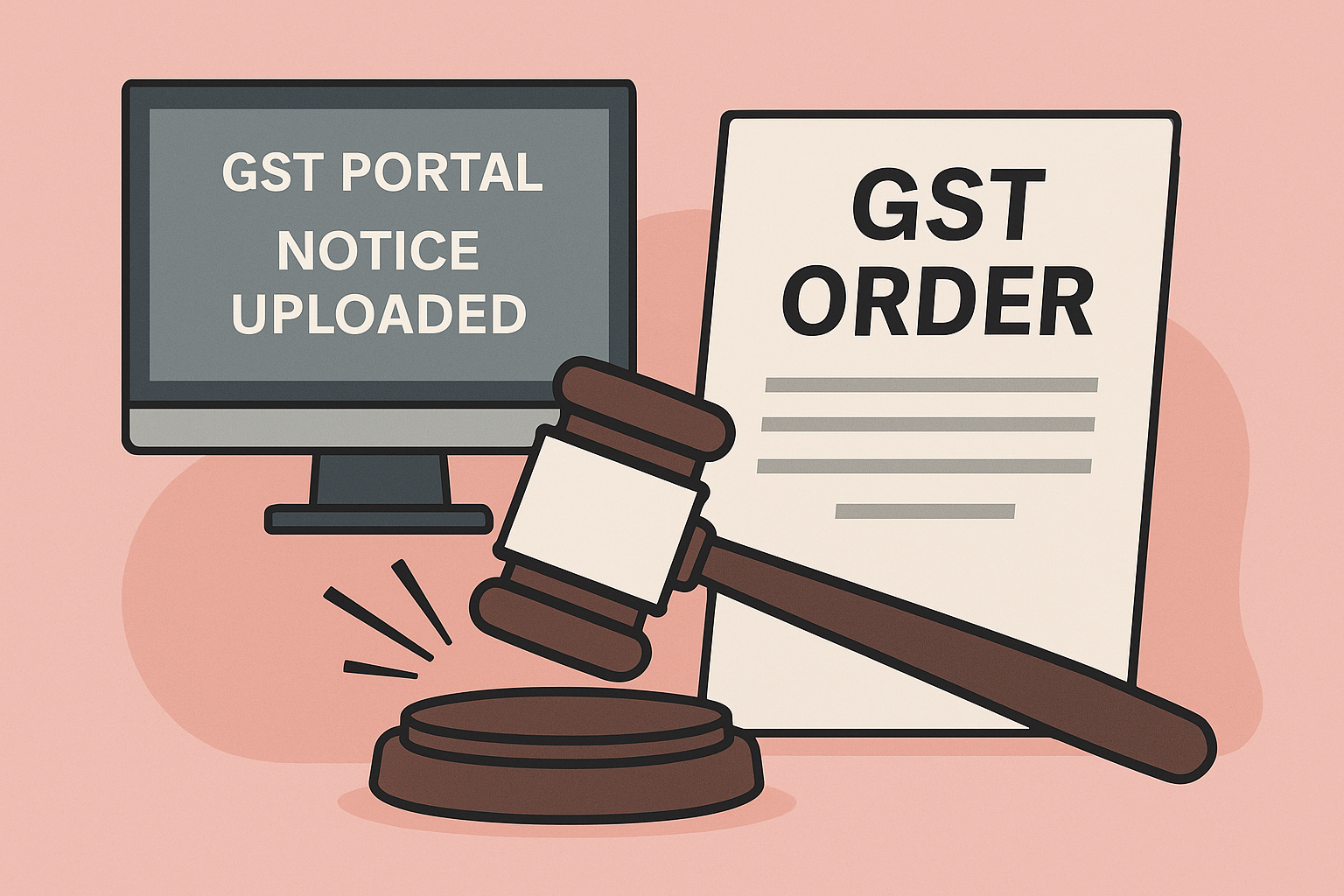
The petitioner, Tvl. Evershine Industries, voluntarily cancelled its GST registration in 2022. After cancellation, the Department uploaded show cause notices and communications under the “View Additional Notices and Orders” column of the GST portal. The petitioner claimed unawareness of such notices and hence could not reply. An ex parte assessment order under Section 73, along with summary order in Form DRC-07 dated 12.04.2024, was passed without granting personal hearing. The petitioner approached the High Court seeking quashing of the order and offered to deposit 10% of the disputed tax.
Questions/Dispute (Para 3, 5, 7)
Whether the impugned assessment order passed solely on portal-uploaded notices, without personal hearing and without exploring other modes of service under Section 169, is sustainable in law.
Observations (Para 7–10)
The Court observed that although uploading notices on the portal is a valid form of service, it cannot be treated as effective service if the taxpayer does not respond. Officers should apply their mind and, in absence of response, use alternate prescribed methods such as RPAD or e-mail as per Section 169(1). Mere completion of formality by uploading notices without ensuring actual opportunity to respond is contrary to natural justice and only leads to unnecessary litigation. Further, since the petitioner had cancelled registration, communications should have been sent to the registered e-mail address. The failure to provide a personal hearing rendered the order unsustainable.
Judgment (Para 11–12)
The Court set aside the impugned order dated 12.04.2024 and remanded the matter back to the Assessing Authority with conditions:
-
Petitioner shall deposit 10% of the disputed tax within 4 weeks.
-
Upon such deposit, petitioner to file reply/objections with documents within 3 weeks.
-
The Authority shall then issue 14 days’ clear notice of personal hearing and pass fresh orders on merits.
The writ petition was disposed of accordingly, with connected miscellaneous petitions closed.
Cases Referred – Summary Table
| Case | Verdict / Principle |
|---|---|
| Present judgment relies on principles from Section 169 CGST Act | Notice service should be effective; uploading alone not sufficient when no response is received. Alternate modes must be used to uphold natural justice. |
Between Fine Lines
This judgment clarifies that GST officers cannot mechanically rely on portal uploads to serve notices, especially when the taxpayer has cancelled registration. Effective communication, including e-mail or RPAD, is necessary. Orders passed without real opportunity of hearing are vulnerable. For businesses, it reinforces the importance of monitoring GST portal and updating contact details, while also providing relief where genuine communication gaps exist.
Disclaimer – “The above summary is for academic purpose only; not formal legal opinion. Seek professional opinion before application. Author or publisher or website shall not be responsible for any usage in any form.”

