

M/s Central Government Employees Consumer Cooperative Society Ltd. (Kendriya Bhandar) v. Commissioner, State Goods and Services Tax, Delhi & Anr.
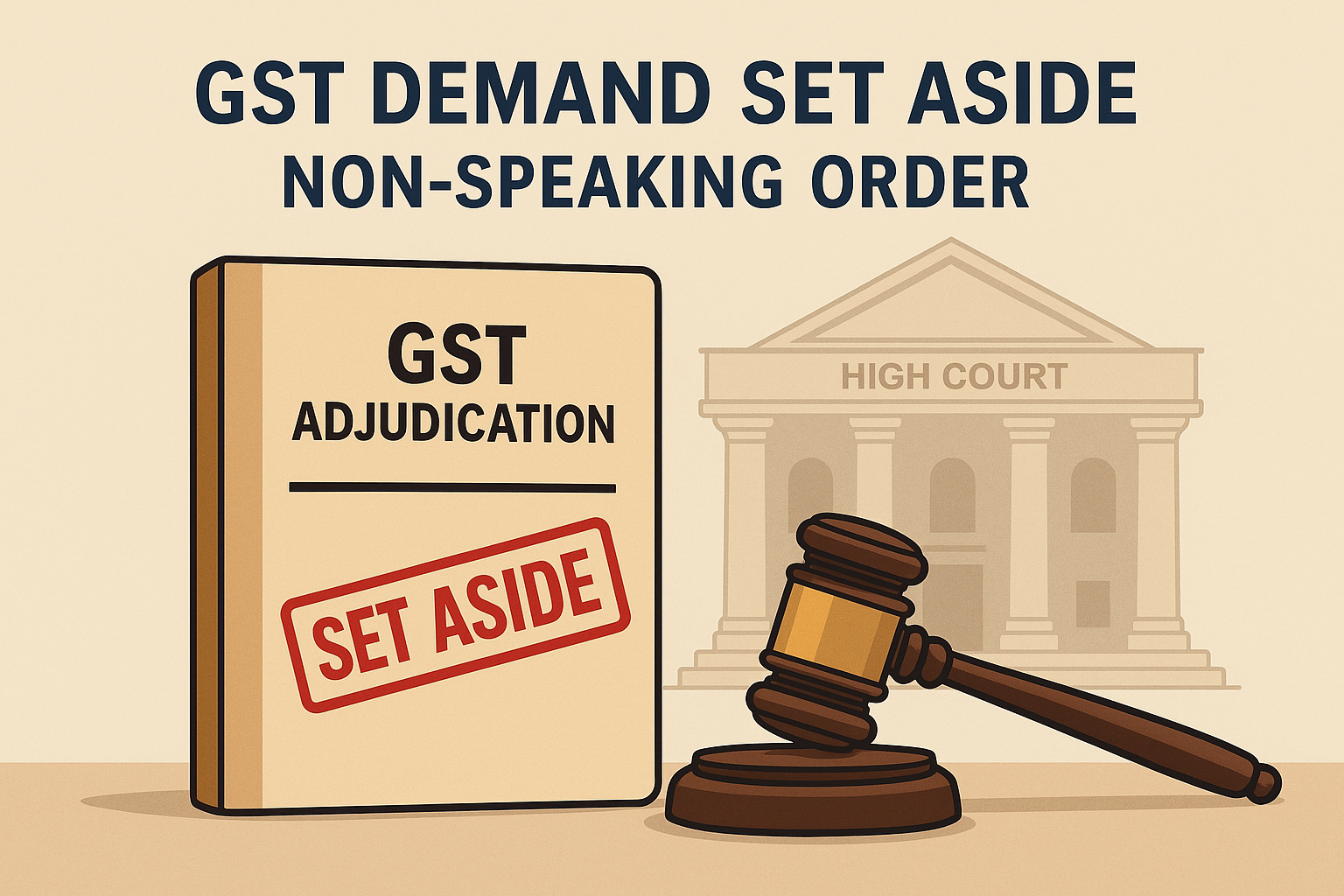
Delhi High Court – W.P.(C) 3873/2024 – Section 73, CGST Act – Demand & Penalty – Input Tax Credit / Output Tax Discrepancies – Judgment dated 24 April 2024
Facts of the Case
The petitioner, a cooperative society popularly known as Kendriya Bhandar, was issued a show cause notice dated 24.09.2023 proposing a GST demand of ₹17,89,56,282/- on multiple allegations including under-declaration of output tax, excess and ineligible Input Tax Credit, ITC from cancelled dealers, return defaulters, and non-business or exempt supplies. The proceedings were initiated under Section 73 of the CGST Act, 2017.
In response, the petitioner filed a detailed reply dated 20.10.2023, furnishing explanations and supporting documents issue-wise under each allegation raised in the show cause notice. However, the Proper Officer passed an adjudication order dated 31.12.2023 confirming the demand along with penalty, stating that no proper reply or explanation had been received from the taxpayer
Questions for Consideration
Whether an adjudication order passed under Section 73 of the CGST Act can be sustained when:
(i) a detailed reply has been filed by the taxpayer;
(ii) the adjudicating authority records that no proper reply was received without examining the reply on merits; and
(iii) the order lacks reasoning and discussion on the taxpayer’s submissions, thereby violating principles of natural justice
Observations of the Court
The High Court noted that the show cause notice itself contained allegations under distinct heads and that the petitioner had furnished a point-wise and reasoned reply addressing each allegation. Despite this, the impugned order merely recorded that no proper reply or explanation had been received, which ex facie demonstrated non-application of mind by the Proper Officer.
The Court held that once a reply is filed, the adjudicating authority is duty-bound to examine it on merits and arrive at a reasoned conclusion. A bald assertion that the reply is not proper, without analysis or discussion, renders the order arbitrary and unsustainable.
Further, the Court observed that if the Proper Officer required any further clarification or documents, the same ought to have been specifically called for, which was admittedly not done in the present case. The impugned order thus failed to satisfy the requirement of a speaking order and violated the mandate of Section 75(4) of the CGST Act concerning fair hearing and observance of natural justice
Judgment / Verdict
The Delhi High Court set aside the adjudication order dated 31.12.2023 and remanded the matter to the Proper Officer for fresh adjudication. The petitioner was granted liberty to file a further reply within 30 days, and the Proper Officer was directed to re-adjudicate the show cause notice after granting a personal hearing and to pass a fresh speaking order strictly in accordance with law and within the limitation prescribed under Section 75(3) of the CGST Act.
The Court clarified that it had not expressed any opinion on the merits of the tax demand and that all rights and contentions of both parties were kept open
Relevant Statutory Provisions
-
Section 73, CGST Act, 2017 – Determination of tax not paid or short paid without fraud
-
Section 75(3), CGST Act, 2017 – Time limit for adjudication
-
Section 75(4), CGST Act, 2017 – Opportunity of personal hearing and principles of natural justice
Classification of the Case (GST Act, 2017)
Category: Adjudication under Section 73 – Demand & Penalty
Sub-classification: Input Tax Credit disputes / Non-speaking adjudication order / Violation of natural justice
Cases Referred – Summary Table
| Case Name | Court | Issue | Verdict |
|---|---|---|---|
| Central Govt Employees Consumer Coop Society Ltd. v. Commissioner, SGST Delhi | Delhi High Court | Non-consideration of reply under Section 73 | Demand quashed and matter remanded for fresh adjudication |
Between the Fine Lines (Practical Takeaway for Trade & Industry)
This judgment reinforces that GST adjudication cannot be reduced to a mechanical confirmation of demands. Where a taxpayer has filed a detailed reply, the Proper Officer must engage with the submissions, record reasons, and pass a speaking order. For businesses, the ruling underscores the importance of filing structured replies and asserting procedural violations where orders are passed without application of mind, as such lapses alone can invalidate high-value GST demands.
Disclaimer – “The above summary is for academic purpose only; not formal legal opinion. Seek professional opinion before application. Author or publisher or website shall not be responsible for any usage in any form.”

