Case Summary
Case Title: Grasim Industries Ltd. v. Union of India & Ors.
Court: High Court of Gujarat at Ahmedabad
Petition No.: R/Special Civil Application No. 10441 of 2024
Date of Judgment: 02.04.2025
Category of Dispute: Input Tax Credit – Wrongly availed ITC due to mismatch in GSTIN disclosure
Relevant Sections: Section 16(2), Section 37(3), Section 73(1), Section 161 of the CGST Act, 2017; Section 20 of the IGST Act, 2017; Circular No.183/15/2022-GST dated 27.12.2022
Facts (Paras 5.1–5.14)
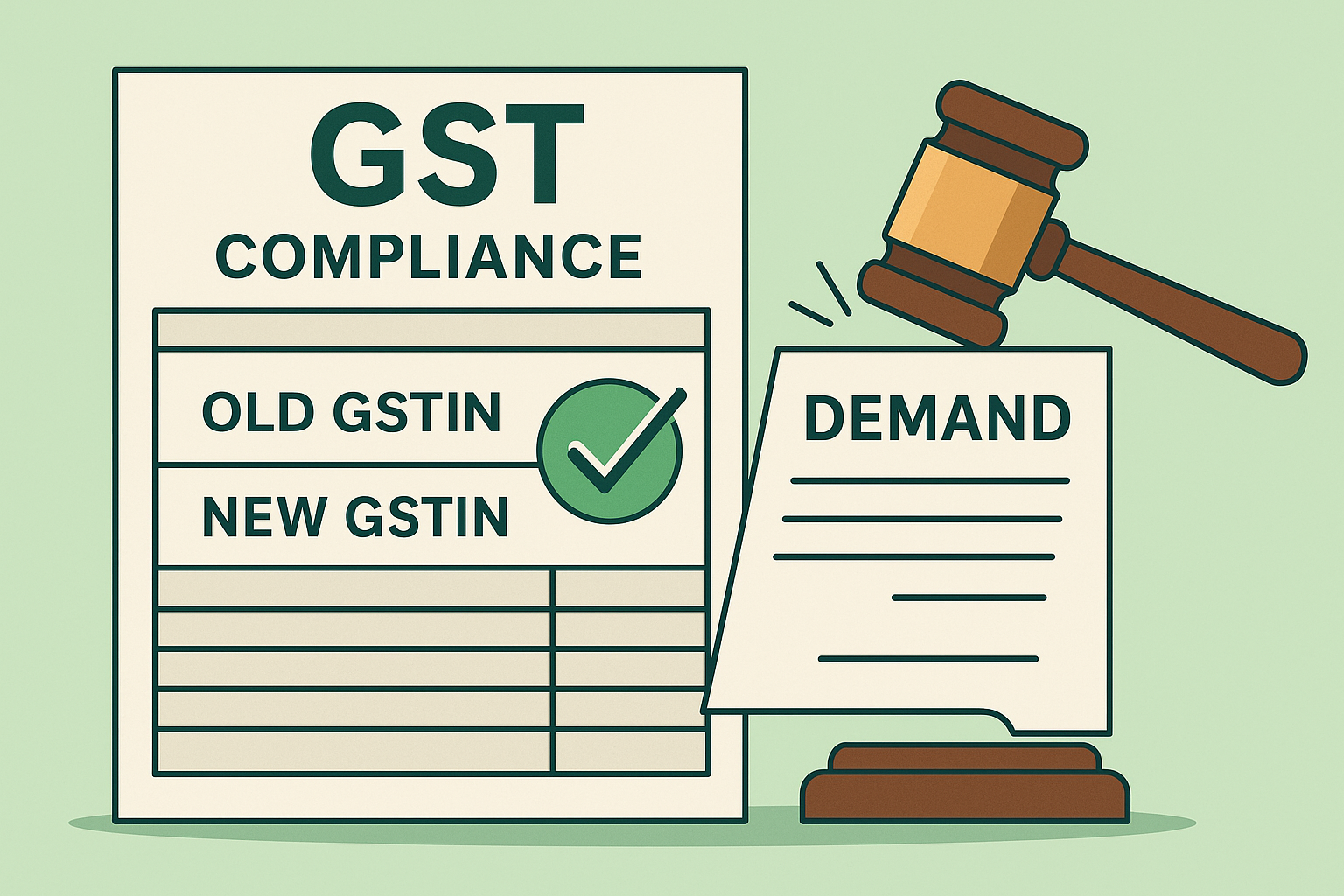
Grasim Industries Ltd., engaged in manufacturing viscose filament yarn, transferred goods from its Maharashtra factory and Delhi warehouse to its Surat godown. The Surat warehouse was registered under a new GSTIN from September 2018. While filing GSTR-1 for FY 2018–19, the company inadvertently mentioned the old GSTIN instead of the new one, though GST was duly paid. The error was rectified within the prescribed time under Section 37(3) in subsequent returns, which reflected in GSTR-2A for FY 2019–20. Despite reconciliation, a demand of ITC reversal amounting to over ₹45 crore (including interest and penalty) was raised by the department, alleging contravention of Section 16(2). Applications for rectification under Section 161 were summarily rejected without reasons.
Questions before Court
-
Whether Grasim had wrongly availed ITC despite rectifying the GSTIN mismatch in later returns?
-
Whether the adjudicating authority erred in confirming demand and rejecting rectification applications without proper verification?
-
Whether departmental authorities acted contrary to Circular No. 183/15/2022-GST and principles of natural justice?
Observations (Paras 20–24)
The Court noted that the mismatch arose solely due to wrong GSTIN disclosure, which was duly corrected and reflected in later returns. Departmental audit itself confirmed ITC admissibility, stating mismatches were caused by supplier amendments and data discrepancies, not tax evasion. Despite this, the adjudicating authority passed a demand order and rejected rectification in a cursory, non-speaking manner. The Court emphasized that officers were duty-bound to verify invoices as per Circular 183/15/2022, but failed to do so. The order was found to be passed with total non-application of mind, contrary to record.
Judgment (Paras 25–29)
The High Court quashed the impugned order-in-original dated 25.04.2024 and rectification rejection order dated 04.07.2024. The Court also directed respondents 2, 3, and 4 to show cause why exemplary costs proportionate to the unjust demand should not be imposed on them. The matter was posted for compliance on 16.04.2025.
Cases Referred – Summary Table
| Case referred | Verdict / Ratio |
|---|---|
| Circular No. 183/15/2022-GST (CBIC) | Officer must verify invoices, receipt of goods/services, and payment before disallowing ITC in case of GSTR-2A mismatch. |
| DG Audit compliance report (internal departmental finding) | Confirmed ITC was admissible, mismatch was due to supplier amendments, not non-payment. |
Between Fine Lines
For trade and industry, this case underscores that mismatches between GSTR-1, GSTR-3B, and GSTR-2A should not automatically trigger ITC denial if errors are later rectified and GST is duly paid. The ruling also signals that departmental officers may face personal liability or costs for high-pitched, non-speaking orders without due verification.
Disclaimer – “The above summary is for academic purpose only; not formal legal opinion. Seek professional opinion before application. Author or publisher or website shall not be responsible for any usage in any form.”