


Case Details
-
Case Title: Shri Shankar Mundra & Anr. v. Union of India & Anr.
-
Court: High Court of Gujarat at Ahmedabad
-
Petition Number: R/Special Civil Application No. 2857 of 2025
-
Judgment Date: 06 March 2025
-
Category: Input Tax Credit – Fake Invoices / Penalty
-
Relevant Sections: Sections 74, 122, 127 of the CGST Act, 2017 & Gujarat GST Act, 2017
Facts (Paras 2–9)
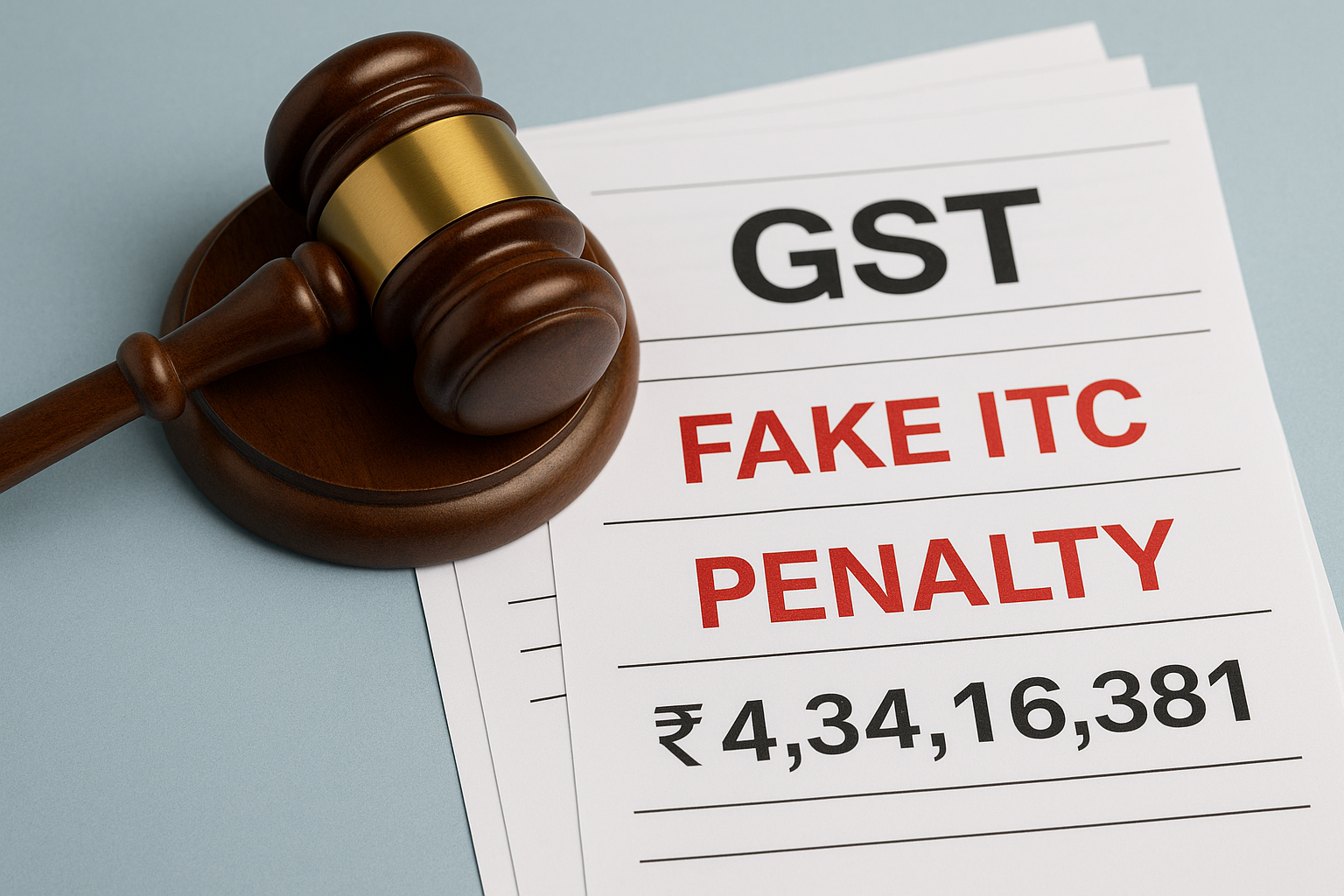
The petitioners challenged an order-in-original dated 24.12.2024 issued by the Additional Commissioner, CGST, raising a demand of ₹4.34 crore along with equal penalty under Sections 74, 122, and 127 of the CGST/GGST Acts. The case arose from a composite show cause notice alleging that M/s Poonam Creation, operated by Ashok Gaggar, availed fake ITC on bogus invoices. Petitioners Shankar Mundra and Ujit Mundra were implicated on grounds that their entity Ashok Creation had deposited ₹10.7 lakh into Poonam Creation’s bank account before its GST registration. Petitioners denied involvement, arguing vague allegations and lack of jurisdiction since they were not “taxable persons.”
Questions Before Court (Paras 7–14)
-
Whether Section 74 proceedings could be initiated against non-taxable persons like the petitioners.
-
Whether vague allegations in the SCN justified levy of penalty under Sections 122 and 127.
-
Whether Section 122(1A), inserted from 01.01.2021, could apply retrospectively for transactions prior to that date.
-
Whether multiple periods could be covered in a single SCN under Section 74.
Observations (Paras 15–22)
The Court noted that the petitioners filed vague replies without disclosing their role or rebutting the allegation of being founders of Ashok Creation that funded Poonam Creation. Their silence amounted to implied admission of being part of the syndicate. Unlike Brindavan Beverages (SC, 2007) where no role was attributed, here detailed roles were articulated in the SCN and order.
The Court held that co-noticees aiding a taxable person can also be proceeded against under Sections 74 and 122. Reliance on Shantanu Hundekari (Bom HC, 2024) was misplaced as that case dealt with a taxation manager assisting investigation, unlike petitioners who were direct beneficiaries of fraudulent ITC. The plea against retrospective application of Section 122(1A) was rejected as petitioners were also covered under Section 122(3) (abetting offences).
Judgment (Paras 23–End)
The Court dismissed the petition, holding that:
-
Petitioners were part of the fraudulent ITC syndicate.
-
SCN was not vague; roles were specifically narrated.
-
Jurisdiction existed under Sections 74 & 122 against co-noticees.
-
The writ under Article 227 was not maintainable as disputed facts had to be adjudicated by proper authority.
Thus, the demand and penalty were sustained.
Cases Referred
| Case | Court | Citation | Verdict |
|---|---|---|---|
| Commissioner of C. Ex. v. Brindavan Beverages Pvt Ltd | Supreme Court | (2007) 5 SCC 388 | Vague SCNs without specific role attribution invalid; relied upon but distinguished. |
| Shantanu Sanjay Hundekari v. UOI | Bombay HC | 2024 SCC OnLine Bom 929 | Penalty cannot apply to non-taxable persons; held inapplicable to present facts. |
| Titan Company Ltd. v. JC GST | Madras HC | 2023 SCC OnLine Mad 8082 | SCN cannot cover multiple periods; cited by petitioners. |
| Vermax Technologie Services Ltd. v. AC CT | Karnataka HC | (2024) 167 taxmann.com 332 | Multiple period notices not valid; cited. |
| Bangalore Golf Club v. AC CT | Karnataka HC | (2024) 166 taxmann.com 642 | Similar ratio on SCNs; cited. |
| JC v. Lakshmi Mobile Accessories | Kerala HC | (2025) 171 taxmann.com 214 | Similar ratio on SCNs; cited. |
| S. Kushalchand International v. AD DGGI | Gujarat HC | SCA No. 15904/2023 (23.01.2025) | Writ against SCN not maintainable; relied on by respondents. |
Between Fine Lines
The Gujarat High Court has clarified that those aiding or abetting fake ITC frauds cannot escape liability merely by claiming non-taxable status. Co-noticees, even if not direct GST registrants, can face proceedings under Sections 74 and 122 if evidence suggests involvement. For businesses, this underlines the importance of distancing from suspicious entities, as even indirect financial links may trigger full liability equal to the fraudulently availed ITC.
Disclaimer – “The above summary is for academic purpose only; not formal legal opinion. Seek professional opinion before application. Author or publisher or website shall not be responsible for any usage in any form.”

