
Preamble
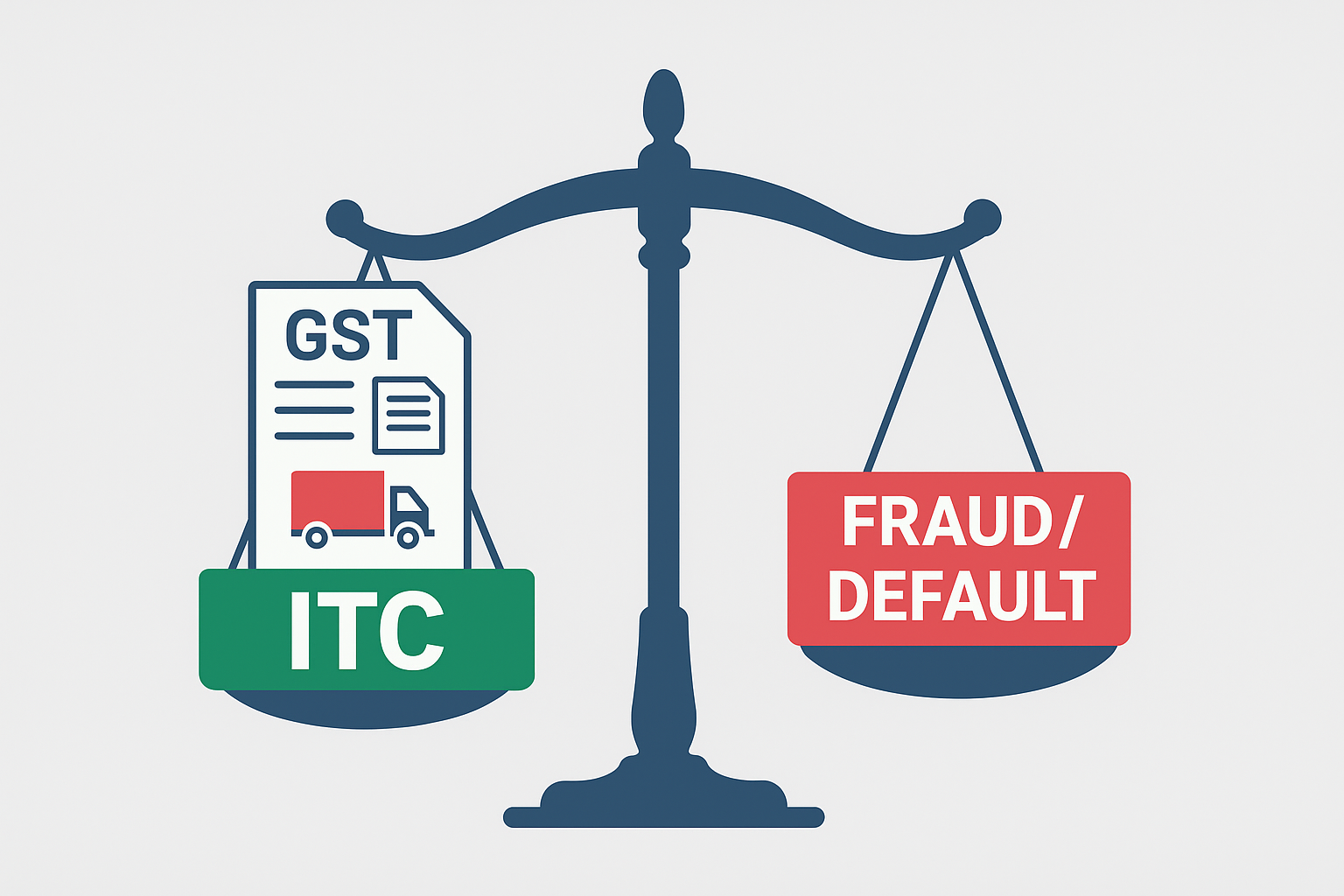
The introduction of Goods and Services Tax (GST) promised simplicity, transparency and seamless credit flow. Yet, disputes surrounding Input Tax Credit (ITC) continue to vex both taxpayers and authorities. One recurring controversy is whether a bona fide purchaser can be denied ITC merely because his supplier’s registration is later cancelled or the supplier defaults in tax compliance. The Allahabad High Court in M/s Safecon Lifescience Private Limited v. Additional Commissioner Grade-2 and Another (Writ Tax No. 389 of 2023) examined this fundamental question under Section 74 of the UPGST Act. This article dissects the statutory framework, judicial reasoning, and wider implications, fortified with statutory extracts, departmental circulars, and precedents from Indian GST jurisprudence.
The statutory canvas: Section 16 and Section 74 of CGST/UPGST
Section 16 of the CGST Act, 2017 entitles every registered person to take ITC subject to fulfilment of prescribed conditions: possession of tax invoice, receipt of goods or services, payment of tax to the Government, and furnishing of return. Particularly, Section 16(2)(c) mandates that credit is available only if “the tax charged in respect of such supply has been actually paid to the Government.”
On the enforcement side, Section 74 empowers the department to initiate proceedings where tax has not been paid, short paid, or ITC wrongly availed “by reason of fraud, willful misstatement or suppression of facts to evade tax”. Unlike Section 73 (which covers bona fide errors), Section 74 carries the stigma of fraud, extending limitation to five years and inviting penalty up to 100%.
The Government itself realised the rampant misuse of Section 74. Vide Circular dated 13.12.2023, it was clarified that proceedings under Section 74 must strictly be confined to cases involving fraud or suppression, and cannot be initiated for mere mismatches or third-party defaults.
The controversy in Safecon Lifescience
The petitioner, engaged in wholesale trading of medicines, had purchased goods from M/s Unimax Pharma Chem, a duly registered supplier holding drug licence. Transactions were supported by tax invoice, e-way bill, transport documents, and payment through banking channel. Supplier filed GSTR-1 and GSTR-3B reflecting tax payment.
Yet, the Deputy Commissioner issued a notice under Section 74 alleging wrongful ITC since Unimax’s registration stood cancelled, and its upstream suppliers had defaulted. Despite petitioner’s detailed rebuttal, ITC was denied on the ground that the buyer’s entitlement hinges on supplier’s compliance with Section 16(2)(c). The appeal also failed, with authorities relying solely on an intelligence report from Vadodara without furnishing it to the petitioner.
Judicial reasoning: protection of bona fide purchaser
The High Court struck down the denial. It observed that:
- Actual movement of goods, banking transactions and return filings were proved – and none of these were rebutted by the department.
- Reliance solely on external intelligence report without confronting assessee was impermissible – as natural justice demands supply of material relied upon.
- Section 74 cannot be invoked absent fraud or willful misstatement – in this case, there was no allegation of collusion by the buyer.
- The theme of GST as a business-friendly law cannot be defeated by mechanical action – officers must verify facts independently before penal consequences are imposed.
The Court relied on its earlier ruling in M/s Khurja Scrap Trading Company v. Addl. Commissioner (Writ Tax No. 743 of 2023), where it was held that bona fide purchasers cannot be harassed under Section 74 when they had produced invoice, e-way bill, and proof of payment.
Rule-based perspective and departmental circulars
Chapter V of CGST Rules (Rules 36–45) governs ITC. Rule 36(1) allows credit only on invoices furnished by supplier in GSTR-1 and reflected in recipient’s GSTR-2A/2B. However, the rule does not envisage denial if the recipient has done due diligence and supplier defaults later.
The CBIC, through various circulars, has consistently stressed verification of fraudulent chains but not to penalise genuine buyers. The 2023 Circular quoted by the Court reinforces that Section 74 proceedings must not be triggered for routine mismatches but only in cases of deliberate evasion.
Implications for taxpayers and authorities
This judgment has far-reaching consequences:
- Reaffirmation of natural justice – no order can be sustained if based on undisclosed reports.
- Relief for genuine businesses – ITC cannot be denied merely because a supplier defaults later; this restores confidence in supply chains.
- Boundary of Section 74 proceedings – authorities must distinguish between fraud cases and compliance mismatches.
- Administrative accountability – officers must independently verify facts rather than act mechanically on intelligence alerts.
Conclusion
The Safecon ruling underscores that GST law cannot punish honest taxpayers for defaults of their suppliers. Section 16’s condition of “tax paid to Government” must be interpreted harmoniously with principles of ease of business, else the seamless credit chain breaks. By limiting Section 74 to cases of fraud or collusion, courts have restored equilibrium between revenue protection and taxpayer rights. Going forward, departmental officers must exercise judicious application of mind, furnish all relied-upon material, and ensure that enforcement actions align with statutory intent.
Disclaimer: This article is for educational purposes only. Professional advice must be sought before acting on any aspect discussed herein.