


Case Summary
Case Title: CTS Industries Limited v. Directorate General of GST Intelligence & Anr.
Court: Patna High Court
Petition No.: CWJC No. 1898 of 2023 & CWJC No. 2806 of 2023
Category: Input Tax Credit / Jurisdictional Overlap / Natural Justice
Date of Judgment: 08 April 2025
Relevant Sections:
-
Section 6(2)(b), 61, 73, 74, 75 of the CGST/BGST Act, 2017
-
Rule 99 & Rule 142 of the CGST Rules, 2017
-
Section 29(2) read with Rule 21 of CGST/WBGST Act (re cancellation of D.S. Bitumix registration)
Facts (Paras 2–10)
CTS Industries Limited challenged the order dated 28.06.2022 issued by the Assistant Commissioner of State Tax, Begusarai under Section 74(9) of the BGST Act for FY 2017–18. The company argued that the proceedings were without jurisdiction because a central agency (DGGI) had already investigated purchases from M/s D.S. Bitumix, Kolkata, a non-existent firm. The petitioner relied on CBIC’s 2018 circular and Section 6(2)(b) of the CGST Act to argue that once central proceedings had commenced, the State authority could not parallelly proceed. The petitioner further contended that no proper hearing under Section 75(4) was granted.
Questions Raised
-
Whether initiation of State GST proceedings was barred since the DGGI had initiated investigation on the same matter (Section 6(2)(b), CBIC Circular).
-
Whether the impugned order violated principles of natural justice under Section 75(4) of the CGST/BGST Act.
-
Whether the State order was jurisdictionally defective when central proceedings later culminated in an order against the petitioner.
Observations (Paras 11–23)
-
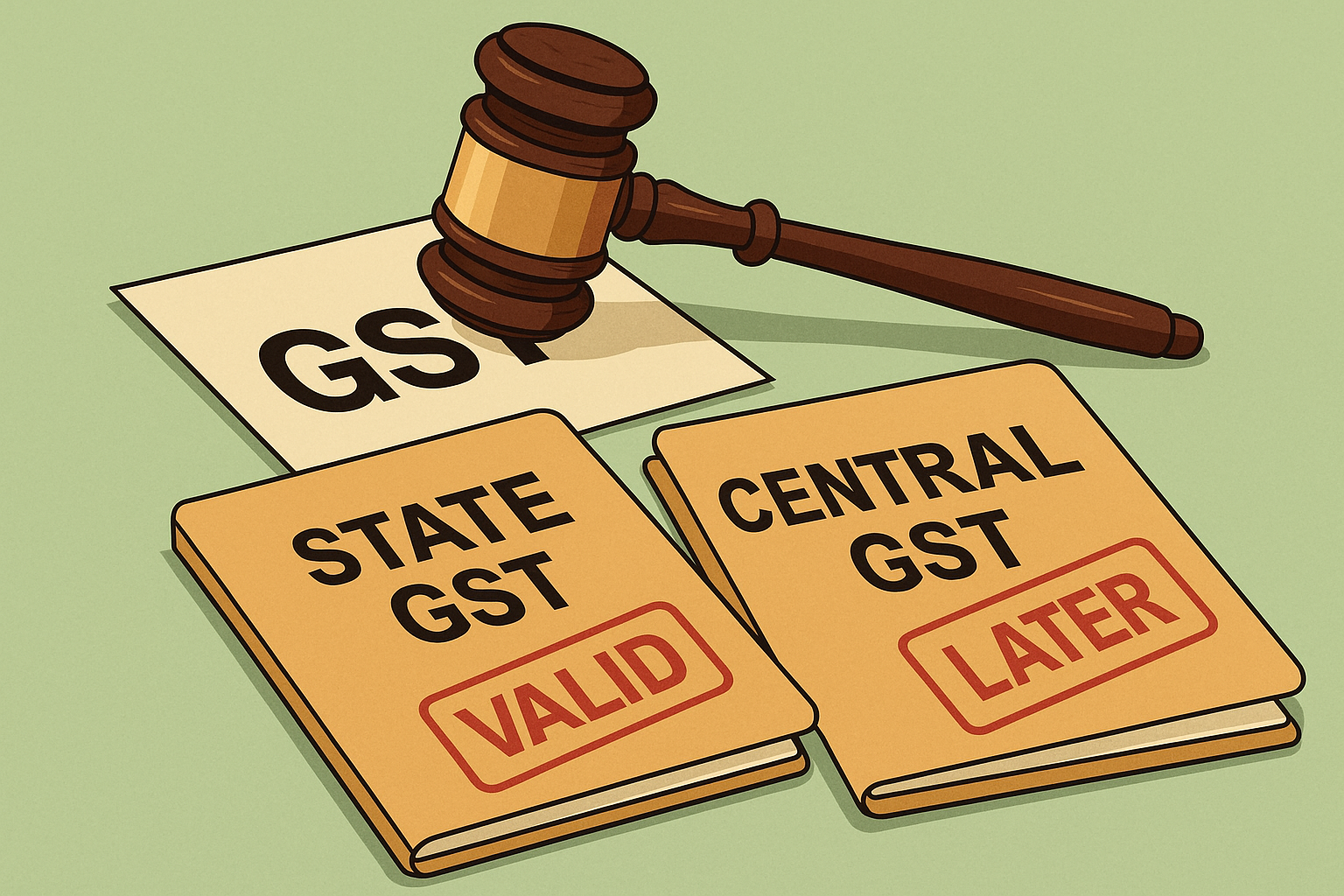
The State argued that its order was based on scrutiny of returns under Section 61 and not directly on central investigation materials. The order preceded the central proceedings (impugned order: 28.06.2022; central demand notice: 24.03.2023).
-
The Court noted that since central proceedings commenced only after the State’s order, Section 6(2)(b) was not violated. The CBIC circular requiring the same authority to complete proceedings did not apply.
-
The impugned order recorded that notices (ASMT-10, reminders, DRC-01) were issued and ignored by the petitioner. Hence, the plea of denial of hearing was not sustainable.
-
The Court distinguished Tata Projects Ltd. (2025), where absence of SCN led to violation of Section 75(4). Here, notices and opportunity for hearing were undisputedly given, but the petitioner failed to respond.
Judgment (Paras 24–29)
The Court dismissed the writ petition, holding that:
-
The State order was validly passed under Section 61 and Section 74.
-
No jurisdictional overlap existed since central proceedings began much later.
-
Principles of natural justice were followed as notices and hearing were provided.
-
The petitioner was free to pursue statutory appeal, with the Appellate Authority to consider limitation sympathetically since the petitioner pursued writ remedy.
Table of Cases Referred
| Case | Court & Citation | Ratio / Verdict |
|---|---|---|
| Tata Projects Ltd. v. Union of India (CWJC 7830/2024, Patna HC, 29.01.2025) | Patna High Court | Order quashed since no SCN or hearing was provided, violating Section 75(4). Distinguished in present case as SCN and hearing were evident. |
Between Fine Lines
For businesses, this case highlights that once a State GST authority initiates assessment based on return scrutiny, the later commencement of central proceedings does not nullify the State’s order. Taxpayers must actively respond to notices; silence will be taken as waiver of their rights. The plea of double jeopardy or lack of hearing will not succeed where notices are served but ignored.
Disclaimer – “The above summary is for academic purpose only; not formal legal opinion. Seek professional opinion before application. Author or publisher or website shall not be responsible for any usage in any form.”

