

Case Title: M/s. Savitri Industries v. Chief Commissioner of CT & GST & Others
Court: Orissa High Court, Cuttack
Petition No.: W.P.(C) No. 17292 of 2025
Category of Dispute: Input Tax Credit (ITC) disallowance under Section 16(2)(c), challenge to demand under Section 74 of the CGST/OGST Act
Date of Judgment: 28 July 2025
Relevant Sections: Sections 16(2)(c), 39, 73, 74, and 107 of the CGST/OGST Act, 2017; Rule 142 of the CGST Rules
Facts: (Paras 2–4 of the judgment)
M/s. Savitri Industries filed a writ petition against the Deputy Commissioner of State Tax, Cuttack-I West Circle, challenging a demand of ₹13,63,646/- raised under Section 74 of the CGST/OGST Act for FY 2019–20. The demand comprised ₹4,82,531/- as tax, ₹3,98,584/- as interest, and ₹4,82,531/- as penalty.
The disallowance stemmed from transactions with M/s. KVR Industries Ltd., whose GST returns (GSTR-3B) were not filed for the months of August to November 2019. The petitioner contended that the ITC was legitimately claimed since the invoices reflected tax payment and appeared in GSTR-2A, arguing that liability could not be shifted to the recipient due to the supplier’s default.
Questions Before the Court: (Paras 1, 4.1, 5)
-
Whether ITC can be disallowed under Section 16(2)(c) merely because the supplier failed to file GSTR-3B returns despite the purchaser having valid invoices and GSTR-2A reflection.
-
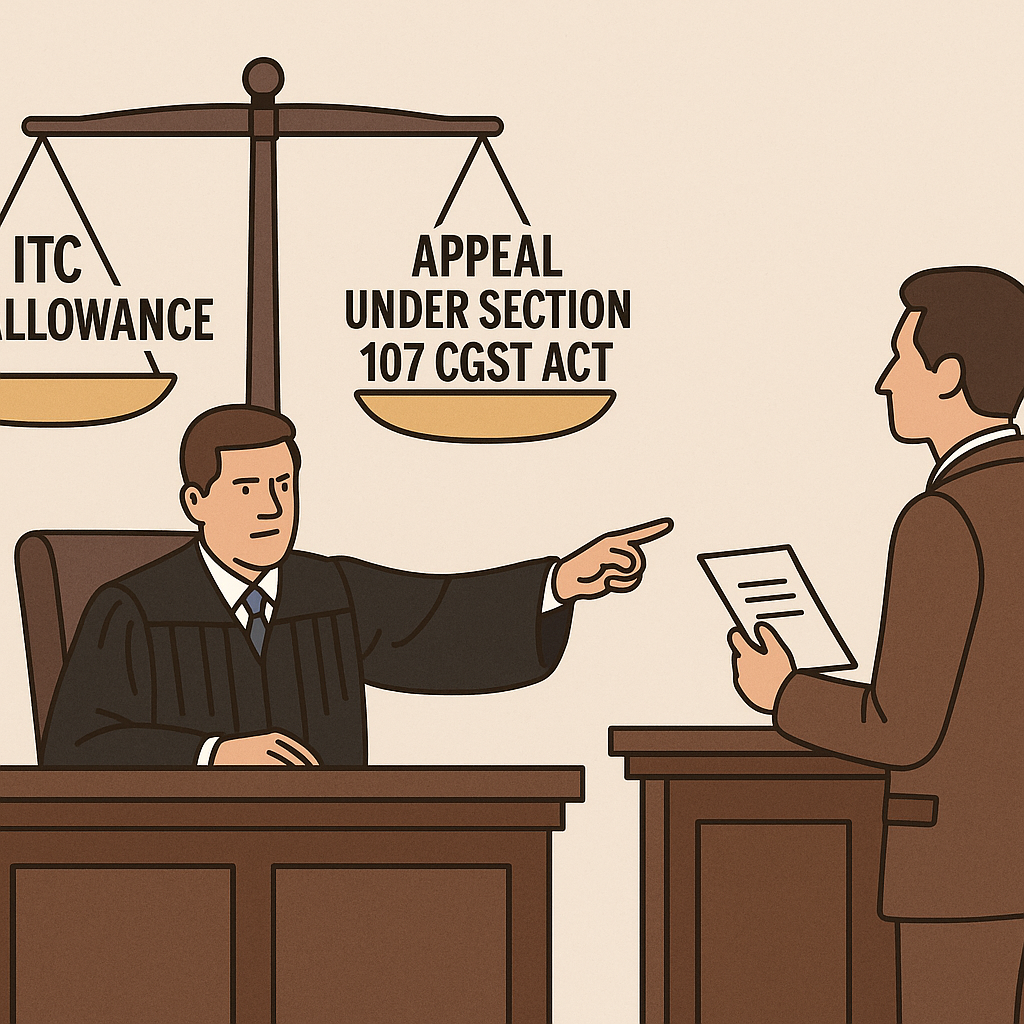
Whether the writ petition is maintainable when an appeal under Section 107 of the CGST Act provides an alternative remedy.
Observations: (Paras 5–8)
The Department argued that the petitioner had an effective alternative remedy under Section 107, and the assessing officer had issued a reasoned order after examining all records — purchase registers, waybills, payment details, and ITC registers.
The Court examined Sections 107(1) & (4), noting that the writ petition was filed beyond the prescribed appeal period. Relying on its earlier rulings (Bikash Panigrahi v. Commissioner CT & GST, Transtech Solution v. Commissioner CT & GST), and the Supreme Court judgment in Commercial Steel Ltd. (2021) 7 SCR 660, it reiterated that writ jurisdiction cannot be invoked unless there is violation of natural justice, excess of jurisdiction, or challenge to the statute’s validity.
The Court observed that the ITC disallowance involved disputed questions of fact (supplier non-compliance, invoice verification, movement of goods) which could only be adjudicated by the appellate authority under Section 107.
Judgment: (Paras 8.4–9)
The Orissa High Court dismissed the writ petition, holding that:
-
The petitioner failed to justify delay or exceptional grounds for invoking writ jurisdiction.
-
The proper remedy lay before the appellate authority under Section 107.
-
Factual disputes on ITC eligibility arising from supplier default require examination by the statutory appellate forum, not under Article 226.
The petitioner was granted liberty to pursue the statutory appeal; no costs were imposed.
Summary of Cases Referred:
| Case Name | Citation/Details | Key Principle / Verdict |
|---|---|---|
| Bikash Panigrahi v. Commissioner CT & GST | W.P.(C) No.12755/2025 (Orissa HC, 15.07.2025) | Writ not maintainable beyond limitation period prescribed under Section 107(4). |
| Transtech Solution v. Commissioner CT & GST | W.P.(C) No.13821/2025 (Orissa HC, 24.07.2025) | Factual issues on ITC to be adjudicated in appeal; writ jurisdiction not appropriate. |
| Banson Enterprises v. Assistant Commissioner | W.P.(C) No.6503/2025 (Delhi HC, 15.05.2025) | Writ not maintainable when appeal remedy exists. |
| Commercial Steel Ltd. v. Assistant Commissioner of State Tax | (2021) 7 SCR 660 | Writ maintainable only in cases of jurisdictional error, violation of natural justice, or fundamental rights. |
| Mukesh Kumar Garg v. Union of India | W.P.(C) 5737/2025 (Delhi HC, 09.05.2025) | Fraudulent ITC cases should be dealt with through appellate remedies, not writ petitions. |
| Santoshi Tel Utpadak Kendra v. Deputy Commissioner of Sales Tax | (1982) 1 SCR 97 = (1981) 48 STC 248 (SC) | Appellate authority has power to enhance or modify assessments. |
Between Fine Lines (Practical Takeaway):
This judgment reaffirms that taxpayers cannot bypass the statutory appellate remedy merely because they disagree with a GST demand. Even in ITC disputes arising from supplier default, factual determinations must first be addressed in appeal under Section 107 before invoking writ jurisdiction. Timely filing of appeals within the prescribed limitation remains critical to preserving rights.
Disclaimer – “The above summary is for academic purpose only; not formal legal opinion. Seek professional opinion before application. Author or publisher or website shall not be responsible for any usage in any form.”

(c) CGST Act, holding that the petitioner had an effective remedy under Section 107 and no exceptional grounds existed for writ interference.)