

Case Summary: M/s GM Powertech and Others v. State of Himachal Pradesh & Others
Court: High Court of Himachal Pradesh, Shimla
Petition No.: CWP No. 5462 of 2020
Date of Judgment: 7 December 2020
Category of Dispute: Appeal against assessment orders – statutory remedy under Section 107
Relevant Sections: Section 107(6) of Himachal Pradesh GST Act, 2017 (pari materia with CGST Act)
Facts
The petitioners, M/s GM Powertech and others, challenged assessment orders relating to GST liability (Annexures P-6 and P-7) before the High Court under writ jurisdiction (Para 1). Their contention was that the bank accounts of the firm had been frozen, preventing them from complying with the pre-deposit condition under Section 107(6) to file an appeal (Para 4).
Questions before the Court
-
Whether a writ petition is maintainable against assessment orders despite availability of appeal under Section 107 of the HPGST Act, 2017? (Para 2)
-
Whether freezing of the petitioners’ bank account rendered the appellate remedy inefficacious? (Para 4)
Observations of the Court
The Court observed that Section 107 of the HPGST Act provides an efficacious statutory remedy of appeal against assessment orders (Para 2). The petitioners failed to demonstrate any exception, such as palpable breach of statutory provisions, which would justify writ interference (Para 3).
The Court acknowledged the petitioners’ difficulty that their bank account was frozen, preventing deposit of the mandatory 10% of the disputed tax. However, the State clarified that it had no objection if the bank released 10% of the disputed tax directly to the GST authority for enabling appeal (Para 4).
Judgment
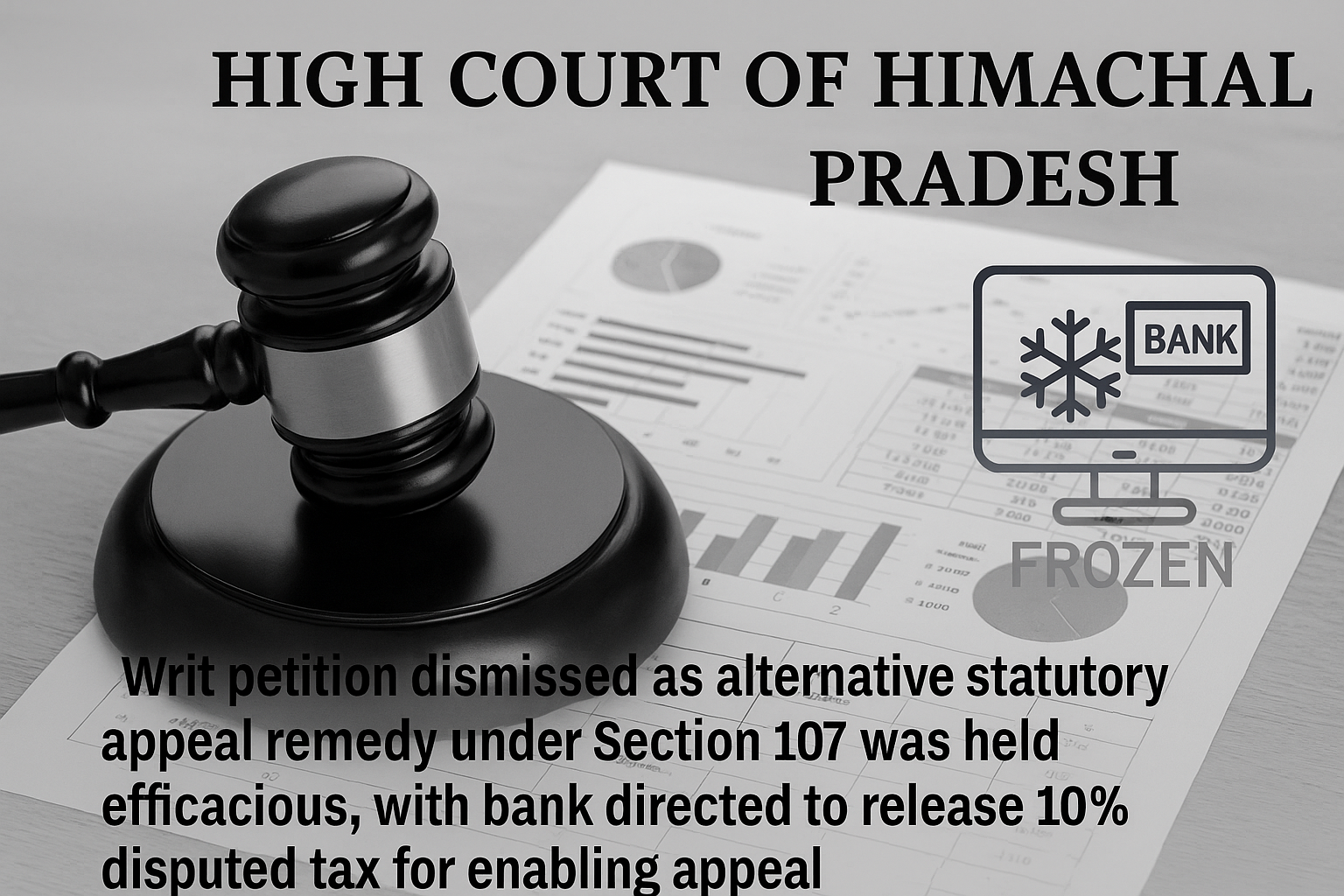
The High Court dismissed the writ petition as not maintainable, directing the petitioners to avail the appellate remedy under Section 107. The Court further directed:
-
The concerned bank shall release 10% of the disputed tax amount directly into the account of the GST authority (Para 5).
-
Petitioners shall also deposit admitted tax liability contemporaneously with appeal (Para 5).
-
Petitioners are free to challenge the validity of bank account freezing before the appellate authority (Para 6).
-
The statutory appeal must be filed within two weeks, and the appellate authority must decide it within four weeks thereafter (Para 7).
Table of Cases Referred
In this case, no external precedents were discussed; reliance was placed entirely on statutory remedy under Section 107.
Between Fine Lines
For trade and industry, this judgment reinforces that writ petitions against GST assessment orders are generally not maintainable when a statutory appellate remedy exists under Section 107. Businesses must prepare to comply with the mandatory 10% pre-deposit of disputed tax and admitted liability. Even where bank accounts are frozen, courts may allow release of funds to facilitate compliance, but direct writ challenges to assessment orders will not succeed
Disclaimer – “The above summary is for academic purpose only; not formal legal opinion. Seek professional opinion before application. Author or publisher or website shall not be responsible for any usage in any form.”

