

Case Summary
Case Title: Gurbani Exports v. Principal Commissioner of CGST Delhi North
Court: High Court of Delhi at New Delhi
Petition No.: W.P.(C) 10406/2025 & CM Appl. 43251/2025
Date of Judgment: 22 July 2025
Category of Dispute: Input Tax Credit – Fraudulent availment and writ maintainability
Relevant Sections: Sections 16, 107, 122(1), 122(3) of CGST Act, 2017
Facts (Paras 2–4, 8–9)
The petitioner, Gurbani Exports, challenged an order-in-original dated 1 February 2025 that raised demands against over 400 entities linked with 23 fake firms allegedly involved in fraudulent availment of ITC worth ₹63.83 crores. The petitioner’s liability was fixed at ₹5,97,223 (tax component ₹2,98,611). While some noticees reversed ITC along with interest and penalty, the petitioner argued that the principles of natural justice were violated since notice for hearing on 13 December 2024 was received only on 12 December 2024. Though a reply was filed on 10 December 2024, it was allegedly not considered in the impugned order, which proceeded ex parte for non-appearance.
Questions before the Court (Paras 5–7)
-
Whether the writ petition is maintainable in cases of alleged fraudulent ITC availment despite the availability of an appellate remedy under Section 107.
-
Whether there was violation of principles of natural justice in conducting the adjudication without considering petitioner’s reply.
Observations (Paras 5–7, 10)
The Court noted that fraudulent ITC cases severely impact the GST regime and ordinarily cannot be entertained in writ jurisdiction. Reliance was placed on its earlier decision in Mukesh Kumar Garg v. Union of India (W.P.(C) 5737/2025), where fraudulent availment of ITC was held outside the writ court’s scope due to complex factual determinations required.
The Court also relied on Assistant Commissioner of State Tax v. Commercial Steel Ltd. (Civil Appeal No. 5121/2021, SC), which clarified that writ petitions are barred where effective statutory remedies exist, except in exceptional cases like breach of fundamental rights, violation of natural justice, excess of jurisdiction, or challenge to vires. None of these exceptions applied here.
However, considering the petitioner’s contention that its reply was overlooked, the Court allowed the petitioner to pursue appeal under Section 107, ensuring the same will not be dismissed on limitation if filed by 31 August 2025 with pre-deposit.
Judgment (Paras 10–12)
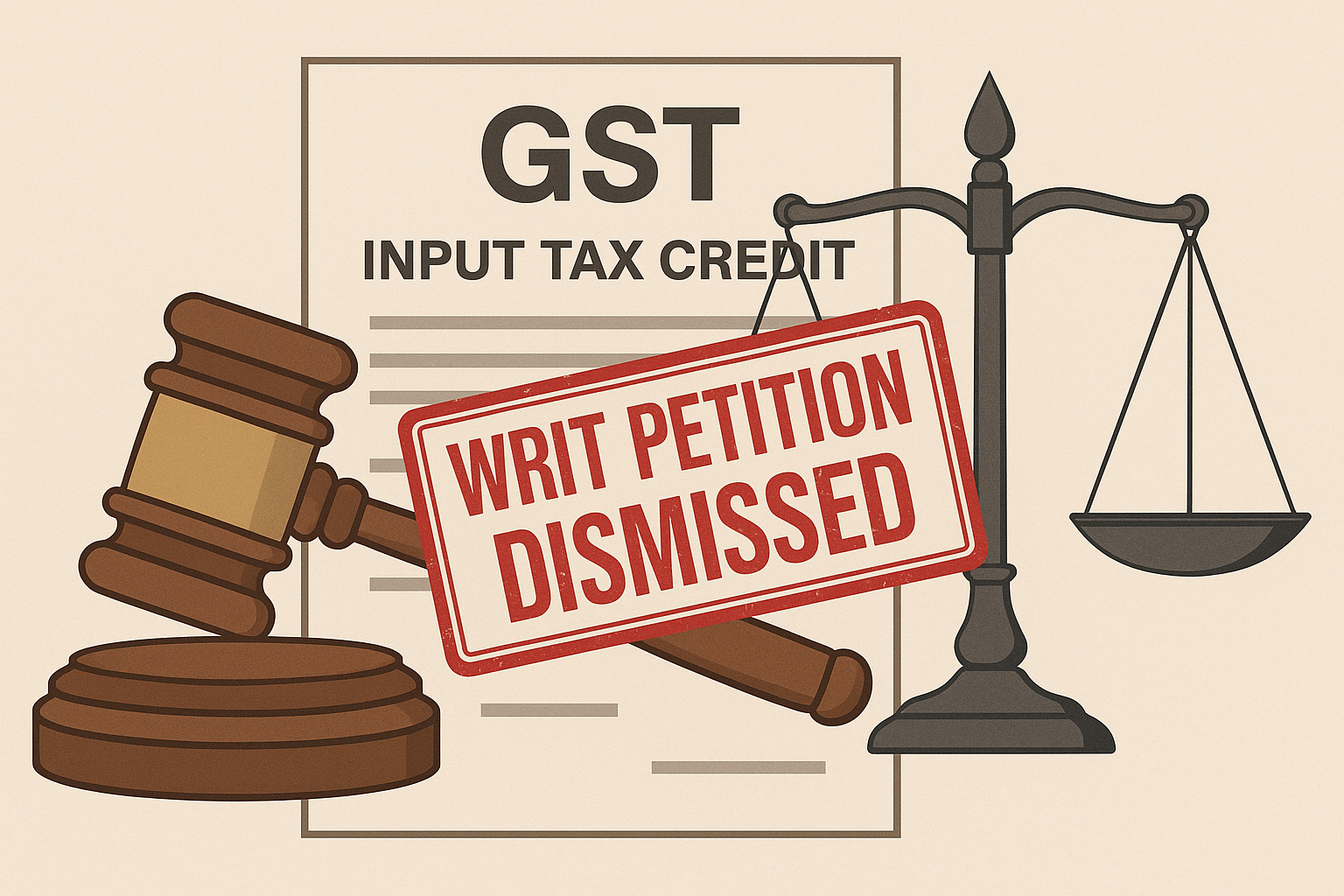
The Court disposed of the writ petition holding that:
-
Writ jurisdiction should not be exercised in fraudulent ITC disputes.
-
The petitioner must avail appellate remedy under Section 107.
-
If the appeal is filed by 31 August 2025 along with pre-deposit, it shall not be dismissed as time-barred and must be decided on merits.
Table of Cases Referred
| Case | Court | Citation/Number | Verdict/Ratio |
|---|---|---|---|
| Mukesh Kumar Garg v. Union of India & Ors. | Delhi HC | W.P.(C) 5737/2025 | Fraudulent ITC cases involve complex facts and cannot be adjudicated under writ jurisdiction; appellate remedy under Section 107 must be pursued. |
| Assistant Commissioner of State Tax & Ors. v. M/s Commercial Steel Ltd. | Supreme Court | Civil Appeal No. 5121 of 2021 | Writ jurisdiction excluded when statutory appellate remedies exist; exceptions only for breach of FRs, violation of natural justice, excess of jurisdiction, or vires challenge. |
Between Fine Lines
For businesses, this ruling reiterates that fraudulent ITC allegations cannot be fought directly in writ jurisdiction. The statutory appeal under Section 107 of the CGST Act is the only remedy, and courts will not bypass it unless rare exceptions apply. Companies must therefore prepare detailed factual defenses at the appellate level, ensuring timely pre-deposit, as courts are reluctant to examine factual disputes under writ jurisdiction.
Disclaimer – “The above summary is for academic purpose only; not formal legal opinion. Seek professional opinion before application. Author or publisher or website shall not be responsible for any usage in any form.”

