

Case Details
Case Title: Cheminova India Limited v. State of U.P. and Others
Court: High Court of Judicature at Allahabad, Chief Justice’s Court
Petition No.: Writ Tax No. 130 of 2025
Neutral Citation: 2025:AHC:8667-DB
Date of Judgment: 20 January 2025
Coram: Hon’ble Arun Bhansali, CJ and Hon’ble Vikas Budhwar, J.
Category of Dispute: Detention of goods and levy under Section 129 (undervaluation allegations)
Relevant Provisions: Section 129(1)(c), Section 129(3), Section 107 CGST Act, 2017; Rule 140 CGST Rules, 2017
Facts (Paras 1–2)
Cheminova India Limited challenged an order dated 04.01.2025 passed under Section 129(3) of the CGST Act, 2017, demanding ₹92,28,444/-. The petitioner argued that the detaining authority had acted without jurisdiction since undervaluation of goods cannot be adjudicated under Section 129, as already settled in judgments like Shamhu Saran Agarwal & Co. v. Addl. Commissioner [2024 (2) TMI 187], A.N. Enterprises v. Addl. Commissioner [2024 (168) Taxman.com 586], and Om Prakash Kuldeep Kumar v. Addl. Commissioner, Grade-2 [2024 (83) G.S.T.L. 71]. The petitioner also contended that though it offered a bank guarantee for release under Section 129(1)(c), the same was wrongly rejected.
Questions in Dispute (Paras 2–4)
-
Whether the detaining authority had jurisdiction to question undervaluation of goods under Section 129.
-
Whether rejection of petitioner’s offer to furnish a bank guarantee under Section 129(1)(c) was justified.
-
Whether the High Court should adjudicate factual issues regarding discrepancy in valuation between two e-way bills or leave it to the appellate forum.
Observations (Paras 3, 5–6)
The Court noted the respondents’ argument that no independent valuation was carried out by the authority; rather, the discrepancy arose from petitioner’s own e-way bills—one from Gujarat to Ghaziabad and another from Ghaziabad to Bareilly—showing different values for the same goods. Since such factual disputes had not been raised before the original authority, they ought to be examined by the Appellate Authority under Section 107.
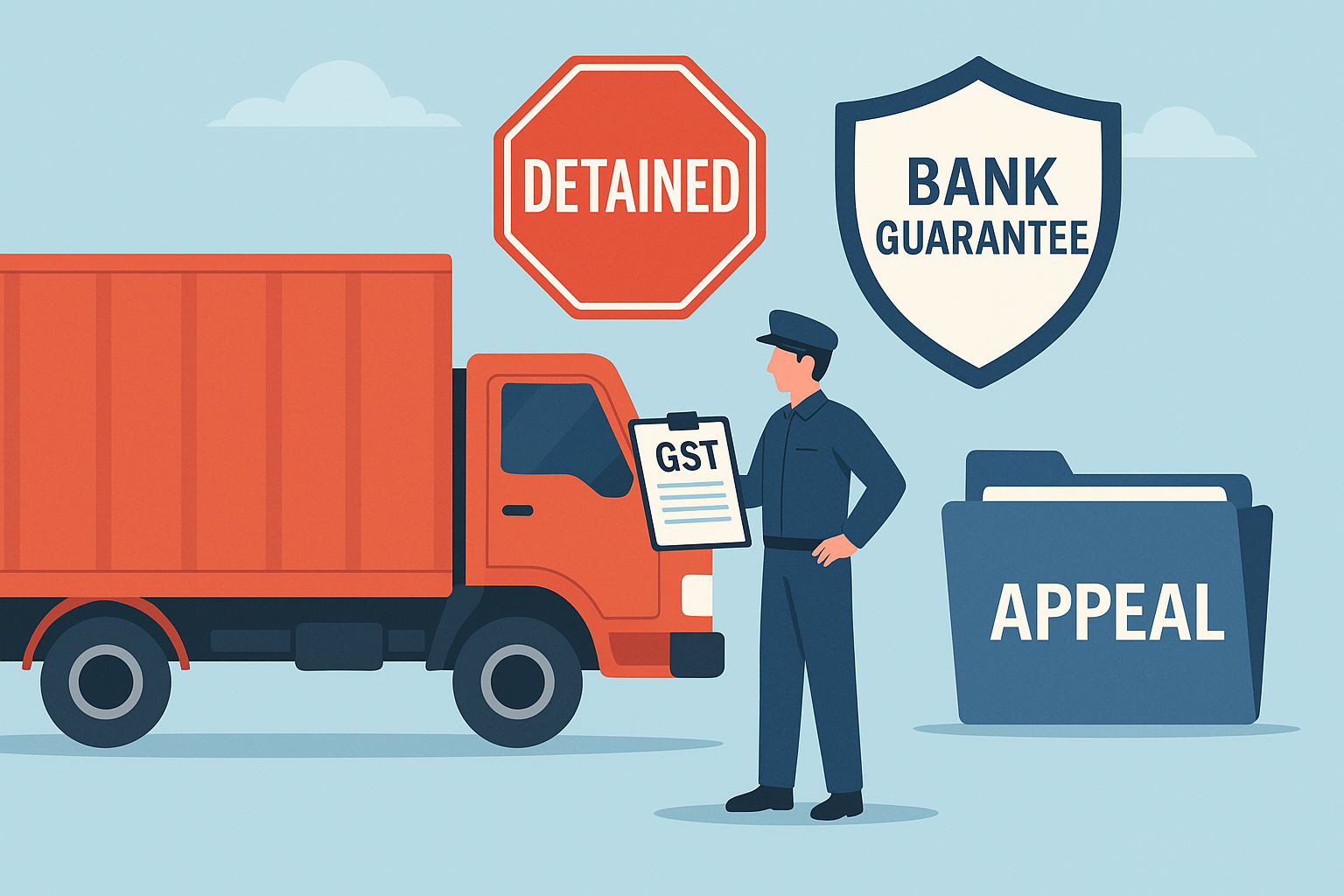
The Court emphasized Section 129(1)(c) read with Rule 140, which allows release of seized goods on execution of bond in Form GST MOV-08 and furnishing of bank guarantee equivalent to applicable tax, interest, and penalty. Thus, the legal remedy was to secure release provisionally and pursue appeal.
Judgment (Paras 7–8)
The writ petition was disposed of with directions:
-
Petitioner’s goods to be released upon execution of bond and furnishing of bank guarantee in accordance with Section 129(1)(c), Rule 140, and Form GST MOV-08.
-
Petitioner permitted to file appeal before the Appellate Authority under Section 107.
-
In case the appeal is dismissed, respondents shall not invoke the bank guarantee for two weeks, allowing petitioner to avail further remedies.
Table of Precedents Referred
| Case | Citation | Held |
|---|---|---|
| Shamhu Saran Agarwal & Co. v. Addl. Commissioner | 2024 (2) TMI 187 | Authority under Section 129 cannot determine undervaluation. |
| A.N. Enterprises v. Addl. Commissioner | 2024 (168) Taxman.com 586 | Jurisdiction to decide undervaluation lies elsewhere, not under Section 129. |
| Om Prakash Kuldeep Kumar v. Addl. Commissioner, Grade-2 | 2024 (83) G.S.T.L. 71 | Detention proceedings cannot travel into undervaluation adjudication. |
Between Fine Lines
For trade, this ruling clarifies that disputes involving alleged undervaluation during transit cannot be adjudicated in detention proceedings under Section 129. Instead, the proper remedy is through adjudication and appeal. Meanwhile, businesses can secure provisional release of goods by executing a bond and furnishing a bank guarantee under Section 129(1)(c), ensuring continuity of operations while litigation continues.
Disclaimer – “The above summary is for academic purpose only; not formal legal opinion. Seek professional opinion before application. Author or publisher or website shall not be responsible for any usage in any form.”

