

Case Reference
M/s Saahaj Milk Producer Company Limited v. State of U.P. & Others
High Court of Judicature at Allahabad
Writ Tax No. 251 of 2023
Neutral Citation: 2025:AHC:26939
Judgment Reserved: 20.02.2025 | Delivered: 27.02.2025
Hon’ble Justice Piyush Agrawal
Category: Penalty under Section 129 – Expiry of e-way bill during stock transfer
Relevant Sections: Sections 122, 129, 130 of CGST/UPGST Act
Facts (Paras 2–6, 10–12)
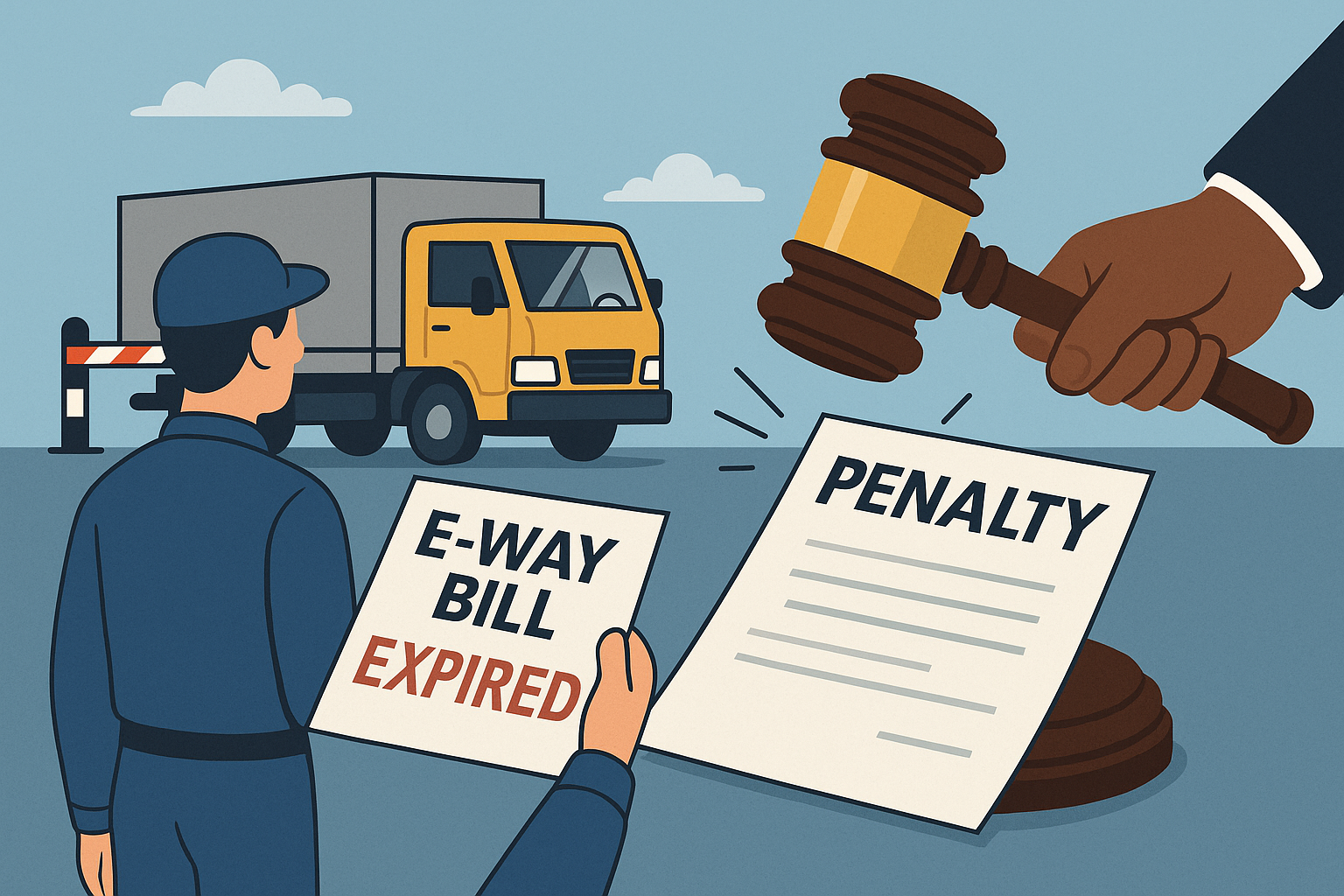
The petitioner, a private limited company engaged in milk and milk products, effected an intra-state stock transfer from its Aligarh unit to Firozabad and Agra units. Two stock transfer challans dated 12.03.2021 were raised, with e-way bills duly generated. The goods were loaded in vehicle no. UP81AB9203. However, the driver diverted the vehicle to his village due to his child’s illness, resulting in a three-day halt. By the time the journey resumed, the e-way bill validity had expired, and the vehicle was intercepted on 15.03.2021.
The petitioner submitted a letter dated 16.03.2021 explaining that the lapse was due to the driver’s act, with no discrepancy in quantity or quality of goods. The authorities nevertheless imposed penalty under Section 129, despite no evidence of intent to evade tax.
Questions in Dispute (Paras 2, 6, 11)
-
Whether expiry of an e-way bill during intra-state stock transfer, without any evidence of tax evasion, can justify penalty and seizure under Section 129.
-
Whether authorities are bound to record a finding of intent to evade tax before invoking Section 129/130 proceedings.
Observations (Paras 10–15)
The Court noted that the goods were stock transfers within U.P., not sales, and hence not liable to tax. Importantly, no authority recorded any finding that the petitioner intended to evade tax. The lapse was attributable solely to the driver.
The Court relied on:
-
Shyam Sel and Power Ltd. v. State of U.P. (2023 AHC 191074) – held that Section 129 must be read with Section 130, requiring intent to evade tax. In minor breaches, Section 122 (penalty for procedural lapses) may apply.
-
Vacmet India Ltd. v. Addl. Commissioner (2023 AHC 200160) – stock transfer between units within the state cannot attract penalty absent intent to evade tax.
-
SC in Asst. Commissioner (ST) v. Satyam Shivam Papers Pvt. Ltd. (SLP 21132/2021, decided 12.01.2022) – expiry of e-way bill due to reasons beyond control, without intent to evade tax, cannot justify penalty.
Judgment (Paras 16–18)
The High Court held that the orders dated 16.03.2021 and 02.07.2022 imposing penalty were unsustainable. The writ petition was allowed, penalty orders were quashed, and any amount deposited by the petitioner was directed to be refunded as per law.
Case Law Summary Table
| Case | Court | Issue | Verdict |
|---|---|---|---|
| Shyam Sel and Power Ltd. v. State of U.P. (2023 AHC 191074) | Allahabad HC | Expired e-way bill – Section 129 vs 122 | Held that intent to evade tax is mandatory under Sec. 129; minor breach should be covered under Sec. 122. |
| Vacmet India Ltd. v. Addl. Commissioner (2023 AHC 200160) | Allahabad HC | Stock transfer within state | Held that intra-state stock transfers not liable for tax; penalty vitiated absent intent to evade. |
| Asst. Commissioner (ST) v. Satyam Shivam Papers Pvt. Ltd. (SLP 21132/2021) | Supreme Court | Expiry of e-way bill due to delay | Held no penalty justified where delay was beyond petitioner’s control and no intent to evade was proved. |
Between Fine Lines (Practical Takeaway)
This judgment underscores that mere expiry of an e-way bill during stock transfer does not automatically attract penalty under Section 129. Authorities must first establish intent to evade tax. In genuine cases of delay without revenue loss, only minor penalty under Section 122 may apply. For businesses, this ruling provides strong ground to contest mechanical penalties imposed during intra-state transfers when no tax evasion is alleged.
Disclaimer – “The above summary is for academic purpose only; not formal legal opinion. Seek professional opinion before application. Author or publisher or website shall not be responsible for any usage in any form.”

