
Case Summary
Case Title: M/s. Sri Ram Stone Works & Ors. v. State of Jharkhand & Ors.
Court: High Court of Jharkhand, Ranchi
Petition Numbers: W.P.(T) No. 5535 of 2024 with analogous petitions (W.P.(T) 5425, 5427, 5684, 5725, 5840, 5913, 6056, 6079, 6080, 6093, 6190 of 2024, W.P.(T) 171 and 1239 of 2025)
Date of Judgment: 09 May 2025 (C.A.V. 17 April 2025)
Relevant Sections: Section 61, 65, 66, 67, 73, 74, 15 of JGST/CGST Act, Rule 99 of JGST Rules
Category of Dispute: Scrutiny of Returns / Jurisdiction of Notices
Facts (Paras 4–7)
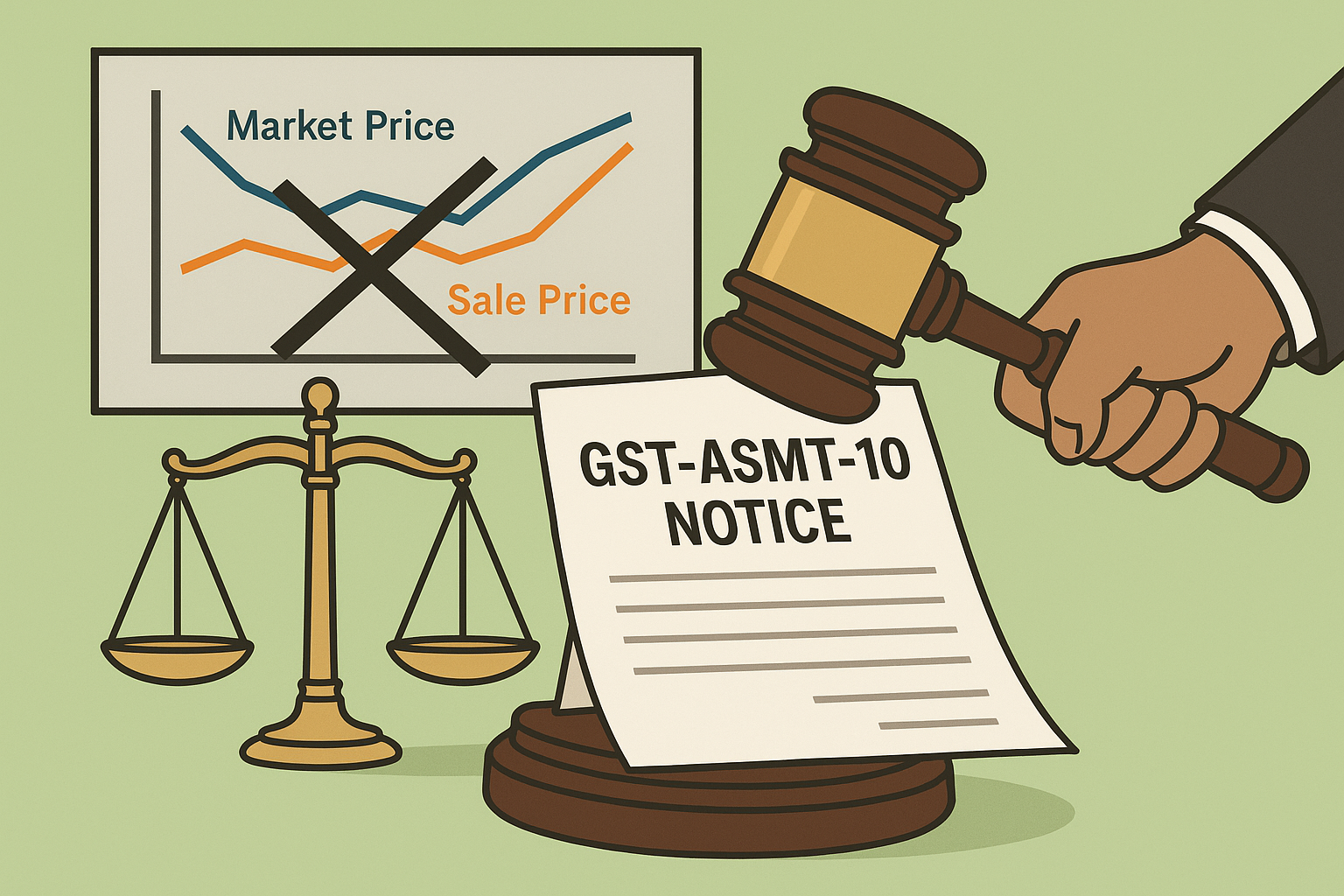
The petitioners, engaged in the business of mining and sale of stone boulders and chips, were issued scrutiny notices in Form GST-ASMT-10 under Section 61 of the Jharkhand GST Act. The notices alleged that petitioners had sold goods at prices lower than the prevailing market price and directed them to explain why proceedings under Section 73/74 should not be initiated. Petitioners contended that scrutiny under Section 61 read with Rule 99 is confined to discrepancies in returns, not comparison with market price.
Questions Before the Court (Para 3)
Whether scrutiny notices under Section 61 of the JGST Act could validly be issued on the ground that taxable value declared in returns was lower than the market price of goods, despite there being no discrepancy in the returns themselves.
Observations (Paras 9–19)
-
Section 61 empowers officers only to scrutinize returns and inform discrepancies within them, not to challenge transaction values by reference to market price.
-
Section 15 recognizes transaction value as the taxable value; sale at a concessional or discounted price does not permit the Revenue to substitute market price.
-
Only if returns themselves contain discrepancies can scrutiny be invoked; otherwise, investigation must proceed under other enabling provisions like Sections 65–67 or adjudicatory provisions under Sections 73–74.
-
Precedent of Nirmal Kumar Pradeep Kumar v. State of Jharkhand (2023) was relied upon, holding that lower sale price cannot alone justify jurisdiction under Section 61.
Judgment (Paras 20–22)
The High Court held that the impugned GST-ASMT-10 notices were wholly without jurisdiction and beyond the scope of Section 61. They were accordingly quashed and set aside. However, the Court clarified that if genuine discrepancies exist in the returns, fresh notices may be issued confined to those discrepancies. No costs were awarded.
Table of Cases Referred
| Case | Court | Verdict |
|---|---|---|
| Nirmal Kumar Pradeep Kumar v. State of Jharkhand (W.P.(T) No. 2222 of 2022, decided 21.02.2023) | Jharkhand High Court (Division Bench) | Held that sales at a price lower than market price cannot trigger scrutiny under Section 61 unless sales are shown to be sham. |
Between Fine Lines (Practical Takeaway)
Tax officers cannot use scrutiny of returns under Section 61 to question why goods were sold below market price. Transaction value, not market value, governs GST. Businesses can sell at concessional or discounted rates without fear of Section 61 notices, though genuine discrepancies in returns may still attract scrutiny or audit under other provisions.
Disclaimer – “The above summary is for academic purpose only; not formal legal opinion. Seek professional opinion before application. Author or publisher or website shall not be responsible for any usage in any form.”