


Case Summary
Case Title: Eastland Switchgears Pvt. Ltd. & Anr. v. The Assistant Commissioner of Revenue, Colootola and Ezra Street Charge, WBGST & Ors.
Court: High Court of Judicature at Calcutta, Civil Appellate Jurisdiction (Appellate Side)
Petition No.: M.A.T. 110 of 2025 with I.A. No. CAN 1 of 2025
Judgment Date: 11 February 2025
Relevant Section: Section 73 & Section 65(6) of the CGST Act, 2017; Rule 101(5) of the CGST Rules, 2017
Category of Dispute: Validity of show-cause notice under GST (Audit and adjudication proceedings)
Facts (Para 1–5)
The appellants challenged a show-cause notice dated 19 November 2024 issued under Section 73 of the CGST Act, alleging mismatch between GSTR-9 and GSTR-1. This followed an audit process that began with a discrepancy memo dated 20 September 2024 for FY 2020–21. The assessee filed a reply on 30 September 2024, after which a final audit report dated 4 October 2024 under Section 65(6) was issued. Though the Rules do not explicitly provide a right to reply to the final audit report, the assessee was permitted and filed a detailed reply on 21 October 2024. However, while the SCN referred to the reply, it summarily dismissed it without reasoning, merely stating that “the decision stands.”
Questions Before Court (Para 2, 6)
The core issue was whether the show-cause notice issued under Section 73 was valid when it did not disclose the adjudicating authority’s prima facie reasoning against the assessee’s audit reply, thereby depriving the assessee of an effective opportunity to respond.
Observations (Para 6–10)
The Court emphasized that a show-cause notice must be specific, disclosing the adjudicating authority’s prima facie view based on the assessee’s reply. Without reasons, the notice becomes vague and unspecific, violating principles of natural justice. It was noted that while 11 out of 12 audit discrepancies were accepted by the authority, the SCN only related to one remaining issue. Yet, the reply to this issue was not dealt with substantively. The Court clarified that Section 65(6) requires the proper officer to inform the assessee of findings with reasons. Failure to do so places the assessee at a disadvantage.
Judgment (Para 10–12)
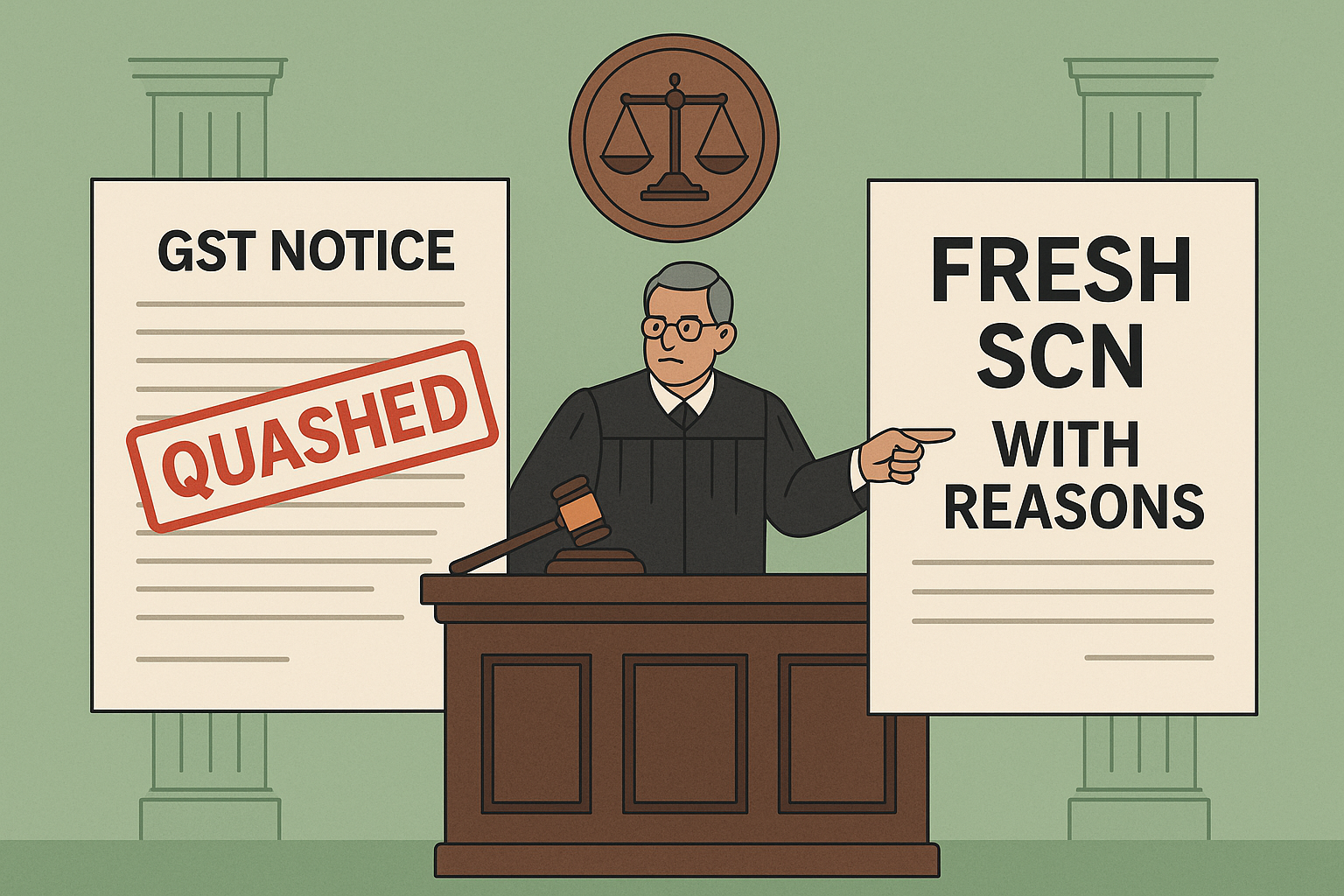
The Division Bench held that the SCN was unsustainable to the extent that it ignored the assessee’s reply. The matter was remanded to the adjudicating authority with directions to issue a fresh SCN clearly recording reasons why the assessee’s reply and supporting documents were not acceptable. The assessee must be granted reasonable opportunity to respond, and adjudication should thereafter proceed in accordance with law. The appeal was accordingly disposed of with no costs.
Cases Referred – Summary Table
| Case | Court’s Finding / Relevance |
|---|---|
| Present case law relied mainly on statutory interpretation (Sections 65 & 73 CGST Act). No external precedents expressly cited in judgment. | Reiterated settled principle that SCN must disclose specific reasoning and not be vague. |
Between Fine Lines (Trade Takeaway)
This judgment reinforces that GST audit and adjudication authorities cannot issue vague show-cause notices. Even when replies to audit reports are acknowledged, they must be substantively considered. For businesses, this ensures that audit disputes cannot be sustained unless the department clearly articulates why the assessee’s explanation is unacceptable. It strengthens the principle of fair hearing and natural justice in GST proceedings.
Disclaimer – “The above summary is for academic purpose only; not formal legal opinion. Seek professional opinion before application. Author or publisher or website shall not be responsible for any usage in any form.”

