
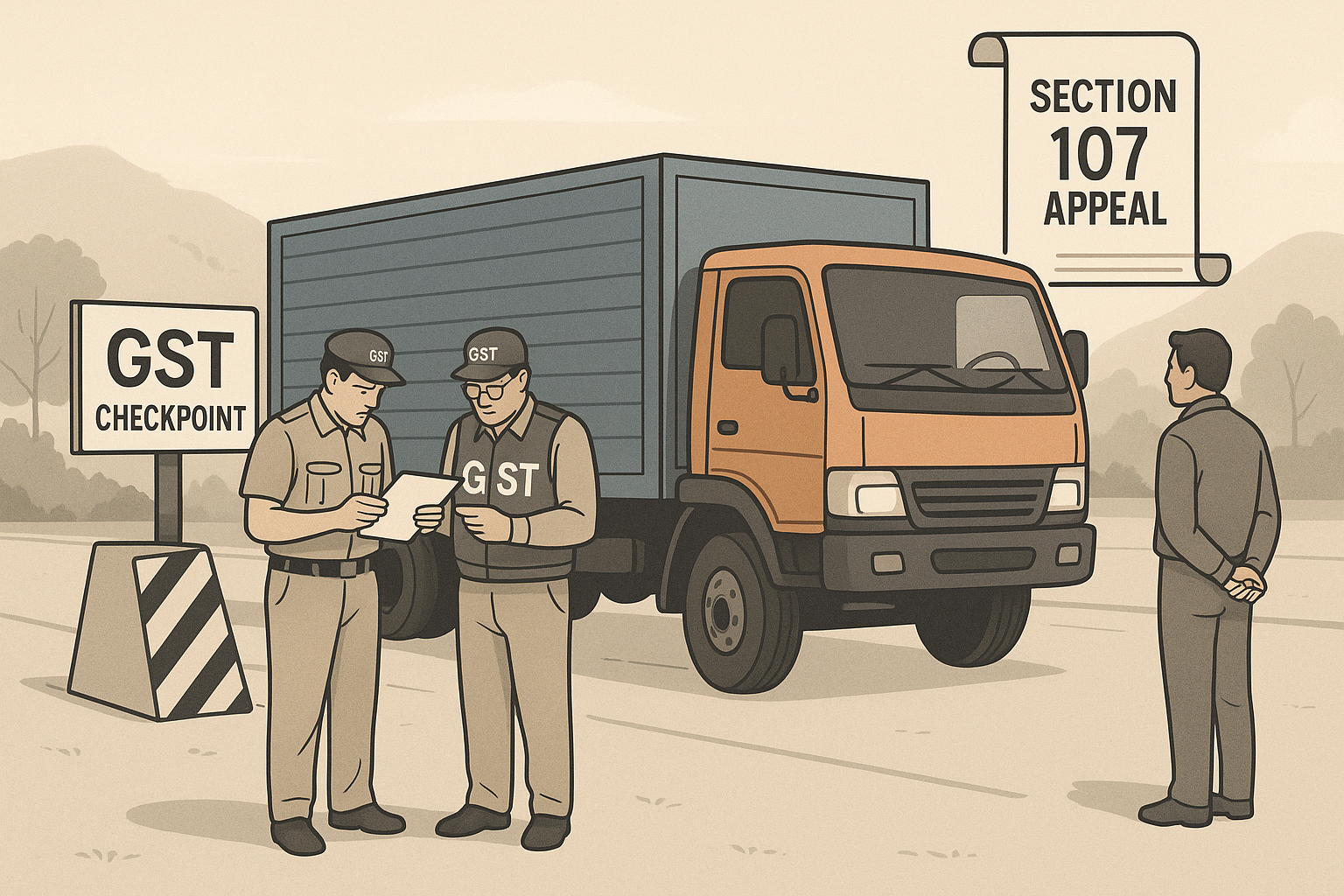
Case Title: S.N. Trading Co. & Anr. v. Union of India & Ors., High Court at Calcutta (Circuit Bench at Jalpaiguri), W.P.A. No. 1240 of 2025, Judgment dated 20 June 2025
Category: Detention & Seizure of Goods under Section 129(3) of CGST Act
Relevant Sections: Sections 15, 107 and 129(3) of CGST Act 2017; Rule 138A of CGST Rules 2017
Facts (Paras 2–6)
The petitioner, S.N. Trading Co., consigned 350 bags (24,500 kg) of Assam dried areca nuts from Siliguri to Kanpur through Nagpur Assam Roadlines, with e-way bill, e-invoice, and consignment note in order. On 16 May 2025, CGST officers detained the truck, finding an excess 420 kg of goods as per weighment slip (26.92 MT vs 24.5 MT declared).
The Assistant Commissioner, Siliguri, issued a notice u/s 129(3) and, on 02 June 2025, finalized the order adopting a higher valuation @ ₹ 240/kg instead of ₹ 145/kg declared, determining higher tax and penalty. The petitioner challenged this in writ, alleging illegal weighment, arbitrary valuation, and jurisdictional error.
Questions before the Court (Paras 7–8)
-
Whether the writ petition is maintainable despite availability of statutory appellate remedy u/s 107.
-
Whether the order u/s 129(3) suffers from lack of jurisdiction, arbitrary enhancement of value, or violation of natural justice.
Observations (Paras 11–14)
The Court noted that:
-
The weighment slip showed excess 420 kg; petitioner did not file credible evidence (like weighment certificate at loading point or supplier’s invoice) to rebut the finding.
-
Bank records showed no consideration received from the consignee, raising doubts about genuineness.
-
The driver’s statement revealed inconsistency about transporter and loading location.
-
The Assistant Commissioner examined documents, issued notice, and considered reply. No violation of natural justice was evident.
-
Determination of valuation (₹ 240/kg vs ₹ 145/kg) is factual and lies within appellate domain; writ jurisdiction cannot re-appreciate such evidence.
Judgment (Paras 15–17)
The High Court held that:
-
The order u/s 129(3) was passed after due process and within jurisdiction.
-
Writ jurisdiction under Article 226 cannot be invoked to contest factual determinations or valuation disputes when an efficacious appeal lies under Section 107.
-
Accordingly, the writ petition was dismissed, granting liberty to file a statutory appeal within prescribed time.
Summary of Cases Referred
| Case | Court & Citation | Verdict / Ratio |
|---|---|---|
| Kamal Envirotech (P) Ltd. v. Commissioner of GST (2025) 170 Taxmann.com 508 (Delhi) | Delhi HC | Penalty cannot be imposed without intent to evade tax. |
| Amplus Kn One Power (P) Ltd. v. Asst. Commissioner State Tax (2024) 166 Taxmann.com 479 | Telangana HC | Valuation disputes are factual—proper remedy is appeal, not writ. |
| M/s Tiwari Furniture v. State of WB (WP 365/2024) | Calcutta HC | Minor procedural errors cannot justify detention absent evasion intent. |
| Ashok Sharma v. State of WB (FMA 136/2025) | Calcutta HC | Natural justice violation must be shown for interference. |
| M/s Raghav Metals v. State of Haryana (CWP 25057/2021) | P&H HC | Penalty invalid if no evidence of intent to evade. |
| Bishnu Supply Co. v. State of UP (2024) 167 Taxmann.com 350 | Allahabad HC | Valuation enhancement cannot be basis for penalty. |
| Rajeev Traders v. Union of India (2022) 142 Taxmann.com 420 | Allahabad HC | Market value substitution unjustified without proof of undervaluation. |
Between Fine Lines (Trade Takeaway)
This judgment underscores that valuation disputes, excess-weight allegations, or procedural irregularities in detention orders under Section 129 must be challenged through the statutory appellate route u/s 107 of CGST Act, not through writ petitions. Businesses must maintain weighment certificates, supplier invoices, and payment trails to defend genuineness of consignments, as courts will not re-examine factual matters under Article 226.
Disclaimer – “The above summary is for academic purpose only; not formal legal opinion. Seek professional opinion before application. Author or publisher or website shall not be responsible for any usage in any form.”


 of CGST Act must be addressed via appeal u/s 107, not through writ.)