

Case Title: Tvl. R.M.K. Enterprises v. State Tax Officer & Anr.
Court: High Court of Judicature at Madras
Petition Nos.: W.P. Nos. 10966, 10968, and 10973 of 2021
Date of Judgment: 02.01.2025
Category: Input Tax Credit (ITC) Dispute
Relevant Sections: Sections 70, 107, 122 of the CGST Act, 2017; TNGST Act, 2017
Facts (Para 2–10):
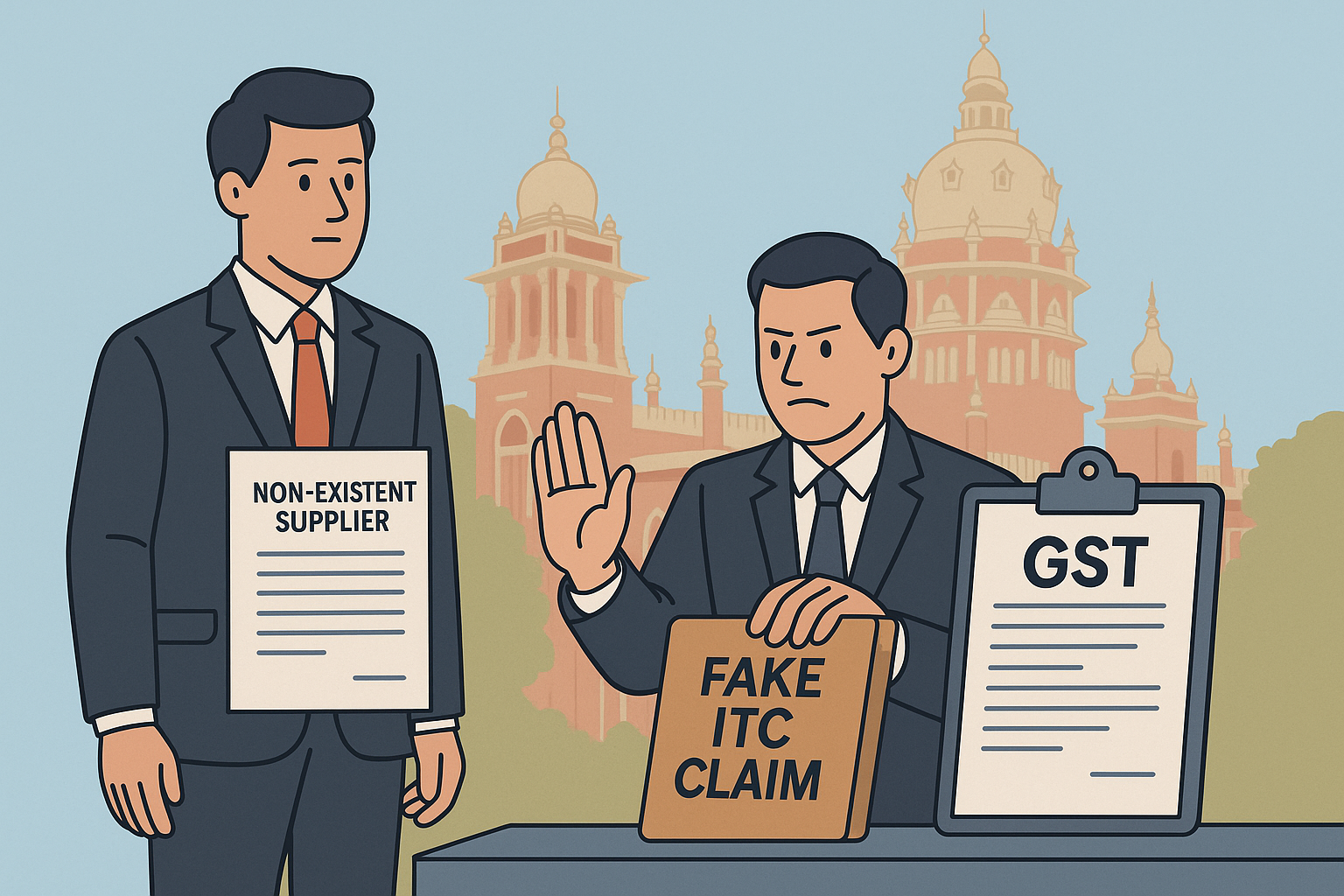
Tvl. R.M.K. Enterprises, a scrap steel dealer, challenged assessment orders dated 03.02.2021 for FY 2017–18, 2018–19, and 2019–20, wherein the State GST authorities disallowed Input Tax Credit (ITC) amounting to over ₹2 crore. The department alleged that the petitioner availed ITC from non-existent suppliers such as Tvl. R.R. Trading Co., Asian Steels, and Lucky Scrap Traders, who had not paid GST in cash and were engaged in circular trading.
The petitioner contended that payments were made through banking channels and that GSTR-2A data reflected such purchases, which should validate the ITC claim. It was argued that orders under Section 122 of the CGST Act had been passed against suppliers, thus confirming their traceability and existence. The petitioner alleged violation of natural justice and that the denial of ITC amounted to double taxation.
Questions (Para 4–10):
Whether ITC availed on invoices issued by suppliers who are later found non-existent can be disallowed when the purchaser has made genuine payments and such transactions appear in GSTR-2A?
Whether the petitioner can bypass the appellate remedy under Section 107 of the CGST Act by invoking writ jurisdiction?
Observations (Para 11–18):
The Court noted that the Intelligence Wing had identified the petitioner’s suppliers as fictitious entities engaged in passing fake credits. The entire tax liability of the petitioner was discharged through ITC, without any cash payment. Referring to the Madras High Court Division Bench decision in Sahyadri Industries Ltd. v. State of Tamil Nadu (2023) 115 GSTR 320, the Court held that the ratio applies equally to GST cases. The Court found prima facie evidence that the petitioner was complicit in availing ineligible ITC and that the department’s inference was not without substance.
Judgment (Para 19–20):
The Court dismissed the writ petitions, observing that there was no merit for interference under Article 226, as the petitioner had an effective alternative remedy under Section 107 of the CGST Act, 2017. However, liberty was granted to file a statutory appeal before the Appellate Commissioner.
Summary of Cases Referred:
| Case | Citation / Date | Court’s Observation / Verdict |
|---|---|---|
| Sahyadri Industries Ltd. v. State of Tamil Nadu | [2023] 115 GSTR 320 (Mad.) | Purchaser cannot claim ITC if suppliers are found to be non-existent or involved in fake billing; burden lies on taxpayer to ensure transaction genuineness. |
| M/s. Lucky Traders v. State Tax Officer | W.P. No. 3435 of 2024 (Madras HC, 15.02.2024) | Similar case where ITC availed on invoices from fake suppliers was disallowed; writ dismissed citing availability of appellate remedy. |
Between Fine Lines (Practical Takeaway):
The judgment underscores that mere appearance of transactions in GSTR-2A or payment through banking channels does not absolve a taxpayer from ensuring supplier authenticity. Where suppliers are found non-existent, the purchaser bears the risk of ITC reversal. Taxpayers must conduct vendor due diligence and retain complete trail documentation, as courts are unlikely to intervene directly where statutory appellate mechanisms exist.
Disclaimer – “The above summary is for academic purpose only; not formal legal opinion. Seek professional opinion before application. Author or publisher or website shall not be responsible for any usage in any form.”

