
Case: M/s. Gillette Diversified Operations Pvt. Ltd. v. Joint Commissioner of GST & Central Excise (Appeals-II), Chennai & Ors.
Court: Madras High Court
Petition Nos.: W.P. Nos. 6524, 6527, 6531, 6537 & 6541 of 2022
Date of Judgment: 05 February 2025
Category of Dispute: Refund of Unutilized Input Tax Credit (ITC) on Zero-Rated Exports
Relevant Provisions: Section 54 of the CGST Act, 2017; Section 16(3) of IGST Act, 2017; Rule 90(3) of CGST Rules, 2017
Facts (Para 2–20)
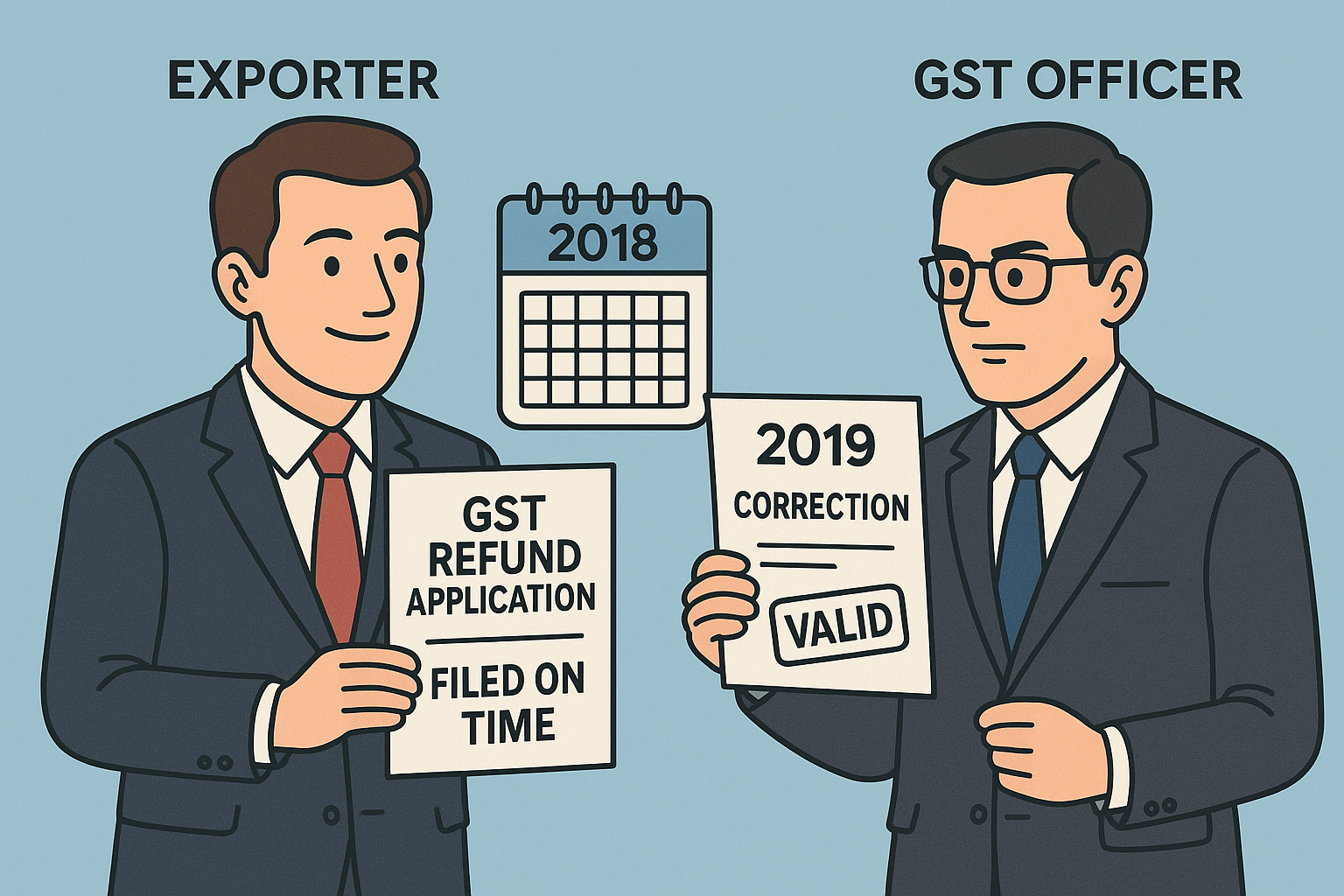
The petitioner, M/s Gillette Diversified Operations Pvt. Ltd., exported goods during July–September 2017 and filed refund claims for unutilized ITC on zero-rated exports under Section 16(3)(a) of the IGST Act read with Section 54 of the CGST Act. The claims were filed online in September–October 2018 and manually submitted on 28.03.2019. After issuance of deficiency memos on 12.04.2019, the claims were refiled on 18.10.2019. The Assistant Commissioner rejected the refunds as time-barred, and the Appellate Commissioner affirmed the rejection based on Para 12 of CBIC Circular No.125/44/2019 dated 18.11.2019, which treated re-submitted claims as fresh applications subject to the two-year limit.
Questions for Determination (Para 12)
Whether the refund applications filed after correction of deficiencies are to be treated as fresh refund applications, thereby rendering them time-barred under Section 54 of the CGST Act, 2017?
Observations (Para 36–70)
-
The Court examined Section 54(1) and Explanation 2 defining “relevant date”.
-
It noted that for exports made in July–September 2017, the initial refund filings in September–October 2018 were within two years from the relevant date.
-
The circular dated 18.11.2019 could not override statutory provisions and was held to be inconsistent with Section 54.
-
The Court clarified that amendment to Explanation 2(e) to Section 54 w.e.f. 01.02.2019 applied prospectively.
-
The proviso to Rule 90(3), inserted on 18.05.2021, excluding the period between original filing and deficiency memo for limitation, was held not retrospective.
-
The Department’s interpretation that limitation should run from re-submission date (18.10.2019) was erroneous; legitimate export refunds cannot be denied when claims were originally filed in time.
Judgment (Para 71–73)
The Madras High Court allowed W.P. Nos. 6524, 6527, and 6537 of 2022, setting aside the appellate orders rejecting refund claims as time-barred. It directed reconsideration of the claims on merits. W.P. Nos. 6531 and 6541 (challenging the Circular and seeking extension under Rule 90(3)) were closed as academic since relief was granted in the main petitions.
Held: Refund claims originally filed within limitation are valid; correction of deficiencies does not reset the limitation period.
Summary of Precedents Referred
| Case | Court / Citation | Verdict / Principle |
|---|---|---|
| Universal Drinks Pvt. Ltd. v. Union of India (1984 18 E.L.T. 207 Bom.) | Bombay High Court | Procedural defects should not defeat substantive refund rights; limitation to be computed from initial filing. |
Between Fine Lines
The judgment reinforces that refund rights under GST cannot be denied on procedural lapses or portal deficiencies. When a refund claim is initially filed within two years, it remains valid even if corrected later. The decision protects exporters from rigid departmental interpretations and upholds the principle that procedural delays by authorities should not prejudice taxpayers.
Disclaimer – “The above summary is for academic purpose only; not formal legal opinion. Seek professional opinion before application. Author or publisher or website shall not be responsible for any usage in any form.”